
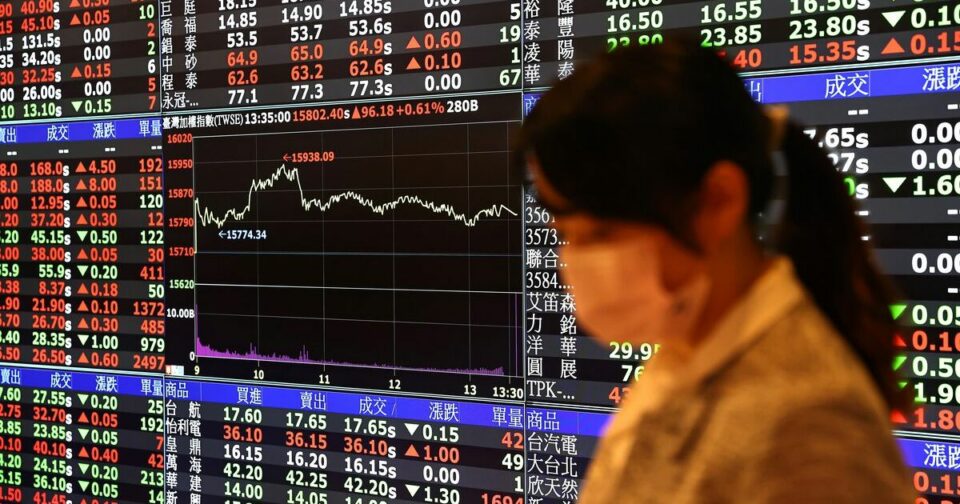
Asian stock markets lurched through a volatile Wednesday as results from the US midterm elections came in. Democrats won majorities in both chambers of Congress, and investors, already nervous about the artificial intelligence trade, reacted first with heavy selling and then with a partial recovery.
The first reaction
Democrats swept to majorities in both the US Senate and House, setting the stage for political gridlock for the rest of President Donald Trump’s final term, Reuters reported. The market reaction was swift. AI-related shares tumbled across Asia, Treasury yields dipped and the dollar fell, while US stock futures dropped sharply before paring their losses.
The moves in futures were large. S&P 500 futures fell 1.2%, Nasdaq-100 futures dropped 2%, and Dow futures declined 412 points, or 0.8%. In Japan, losses were deeper at the worst point. The Japanese benchmark slid more than 3% after early results showed a big Democratic win.
A V-shaped recovery
Markets did not stay at the lows. South Korea’s Kospi surged as much as 3.2% after the open, fell as much as 4%, and then erased its declines. By the close, one market report described a V-shaped turnaround in Japan and South Korea, with the Kospi closing up 0.6% and the Nikkei barely holding above the 62,000 mark.
European futures also pointed lower at the start of the day. Contracts tracking Europe’s main indices were down between 0.3% and 0.5%, and Euro STOXX 50 futures were down 0.7%.
Why AI stocks took the hit
The concern is not the election result itself but what it could mean for technology. Some investors fear that a Democratic sweep could lead to more regulation and restrictions on AI development. A strategist at Moomoo ANZ pointed to a specific risk: Texas and Georgia together make up about a third of all AI data-centre spending and projects, so Democratic wins in their governor races could slow the rollout.
The broader context matters too. One strategist noted that the Goldman Sachs Broad AI basket fell 15% in October and is down more than 24% from its peak. Investors came into the election already worried about spending levels and returns.
Not everyone sees a political story
Several analysts argued that the move reflects earlier fears more than the vote. J.P. Morgan Asset Management’s Tai Hui said how much of the move is the election and how much is the AI story that has been building for three or four weeks is an open question, and he thinks it is mostly the latter. Christopher Hodge of Natixis said the direct economic implications are not huge.
Michael Arone of State Street Global Advisors offered a warning about behaviour rather than politics: the big risk to markets is not the blue wave but investors overreacting to it. Another strategist noted that a divided government is likely to keep fiscal deficits more limited, although the president still has veto power, a debt ceiling looms next year, and he retains influence over trade, tariffs and foreign policy.
Cross-asset moves
Other markets sent a consistent signal that investors expect less fiscal stimulus. Treasuries rose as investors bet that gridlock will curb deficit-expanding legislation and further Treasury issuance. The dollar fell to a five-week low against major currencies, and gold jumped back above $4,000 an ounce. Oil moved lower. Brent traded below $104 a barrel and US crude around $96.
Some sectors benefited. Renewable energy stocks rose on speculation that Democrats could reverse policies affecting the solar industry. AMD also gave up part of its after-hours surge as futures weakened, though its quarterly results had been strong. What happens next
The coming sessions will test whether Wednesday’s rebound in Asia was a sign of resilience or a pause. Wall Street opens later with the main question being whether the Nasdaq follows the futures lower. The US jobs report on Friday and the Bank of England’s rate decision on Thursday will compete for attention.
For longer-term investors, the central question is how a divided Congress affects spending on AI infrastructure, technology regulation and government borrowing. Analysts expect gridlock to limit major legislation, but they also warn that investigations and budget fights could create new headlines. For now, markets are treating the vote as a catalyst for an adjustment that was already under way.
