
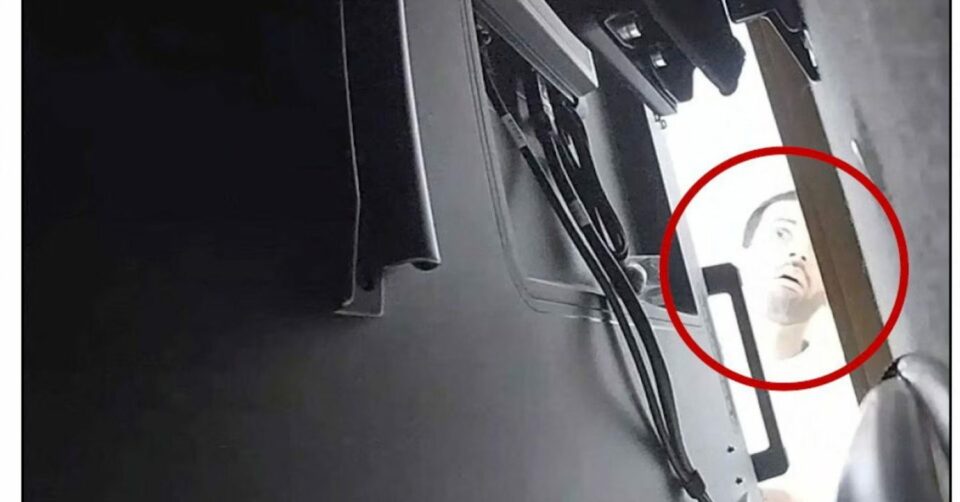
Federal prosecutors have charged an OpenAI engineer with hiding an audio recorder in an executive conference room at the company’s San Francisco headquarters, an episode that has sharpened concerns about espionage around the world’s most closely watched artificial intelligence developers.
The Justice Department announced the arrest on Tuesday. The suspect, 35-year-old Abdulrahman Alfozan, is an engineer from Saudi Arabia. He worked on the product team, was dismissed by the company and was arrested on 9 October. He is charged with using a device to intercept oral communications. The allegations have not been tested in court.
How the device was found
According to the FBI complaint, OpenAI staff discovered the recorder on 30 September, plugged into a USB port on the back of a television in an executive conference room. The thumb-sized device had a microphone, could connect to a camera, and was concealed in toilet paper.
The find followed a security check. OpenAI told Fortune that its technical surveillance countermeasures team spotted the device during a sweep of the room. The company then moved quickly to monitor the area. On 5 October, surveillance footage allegedly captured Alfozan entering the room and looking behind the television where the device was hidden. That day he allegedly left an unattended bag in another room containing his wallet, his identification and a second, similar recording device.
OpenAI says it used its own technology in the inquiry. The company said it used internal AI models to identify the individual responsible and trace the device’s origins.
What OpenAI and the FBI are saying
OpenAI has tried to reassure customers and the public. In a post on X, the company said it has no indication that the individual improperly accessed or removed model weights, source code or customer data. It also said it had evidence the employee intended to place further recording devices in sensitive areas of its offices.
The company described the equipment as sophisticated. It said the device had advanced encryption, audio monitoring capabilities and a data-transfer mechanism designed to evade monitoring, though it is unclear how far it differs from other recording devices. What the recordings were for remains unknown. The purpose of the device has not been made clear.
The FBI has framed the case in strategic terms. FBI Director Kash Patel said the alleged scheme was meant to capture sensitive communications about the company’s superintelligence technology. The Saudi embassy in Washington had not responded to a request for comment.
A timeline measured in days
The chronology is notable for its speed. The device was found on 30 September, the FBI arrested Alfozan on 9 October, and the arrest was announced publicly on 13 October. The gap between discovery and arrest was just over a week, which suggests investigators moved quickly once the company raised the alarm.
Why it matters
The room in question was no ordinary meeting space. The FBI said executives there often held discussions of highly confidential technical, commercial and strategic information. For companies building frontier AI systems, that kind of talk can be as valuable as the code itself, covering product timing, partnerships, pricing and research direction.
The case also underlines a point security specialists have long made: the biggest risks do not always come from outside hackers. A trusted employee with a badge, a laptop and access to shared spaces can present a very different kind of threat. Technology firms have invested heavily in cybersecurity, but physical security and insider-risk programmes now face the same scrutiny, particularly where the technology is considered strategically important.
What happens next
The FBI is continuing to investigate. Court proceedings will determine whether the charges stand, and questions about motive, any possible outside direction and what, if anything, was recorded are still open. For now, the episode serves as a reminder that the race to build advanced AI is being fought in conference rooms as well as data centres.
