
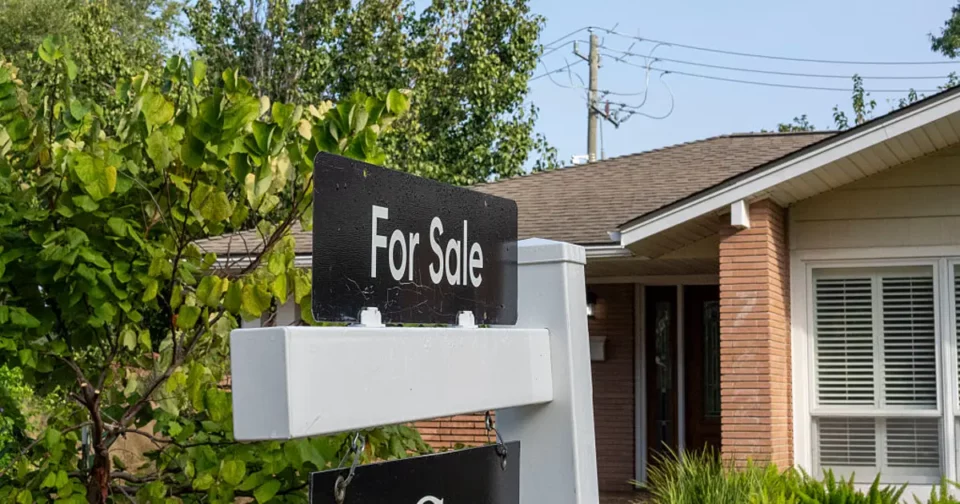
For millions of would-be homebuyers, the most important number in the American economy this autumn has crossed a psychological line. The average rate on a 30-year fixed mortgage has climbed above 7%, and there are signs it is still rising.
Freddie Mac’s weekly survey showed the benchmark rate at 7.03% as of 24 September, up from 6.95% a week earlier and 6.30% a year ago. It was the fifth consecutive weekly increase.
Rates rose again this week
Daily figures suggest the trend continued after the survey closed. Mortgage News Daily’s index of top-tier 30-year fixed rates rose from 7.50% to 7.58% on Tuesday, its highest since November 2023. The two measures use different methods, since Freddie Mac averages rates from purchase applications submitted over a week while the daily index tracks lender pricing, so the numbers are not directly comparable. Both point in the same direction.
Shorter loans have moved up too. The 15-year fixed rate averaged 6.42% in the Freddie Mac survey, up from 6.26% the previous week and from 5.49% a year earlier.
Sam Khater, Freddie Mac’s chief economist, said the housing market remains supported by a solid labour market and an economy growing at a healthy rate. That resilience is part of the problem: strong activity gives the Federal Reserve cover to keep tightening.
Why bond yields are the driver
Mortgage rates do not follow the Fed’s policy rate directly. They are closely tied to the yield on the 10-year Treasury note, which is the benchmark for mortgages, auto loans and credit cards, and that yield has surged. It closed near 5.24% on Tuesday, close to its 2007 high of 5.32%.
The rise reflects stubborn inflation. The Fed raised interest rates this month for the first time in three years, and futures markets are pricing roughly a 70% chance of another quarter-point increase at its 28 October meeting. The Fed’s preferred measure of inflation for August is due today, with economists expecting an annual rate of 3.7%. A hotter reading would strengthen expectations for a further hike and could push yields, and mortgage rates, higher again.
Rising fuel prices add to the pressure. Consumer confidence has fallen to its lowest level since 2014, with households citing prices and borrowing costs, and the Conference Board said the weakness extended across income groups.
What it means in dollars
The effect on monthly payments is significant. On a $400,000 loan over 30 years, principal and interest at 7.03% comes to roughly $2,670 a month. At the 6.30% average of a year ago, the same loan would cost about $2,475. That is a difference of roughly $190 a month, or more than $2,200 a year, before taxes and insurance. These figures are our own illustration of typical borrowing costs, not a quote from any lender.
Housing analysts say the pain is not only about affordability. Home prices remain anchored by the memory of sub-3% mortgage rates, which discourages existing owners from selling and giving up cheap loans. Higher rates therefore squeeze buyers without necessarily bringing prices down, closing the door on a large share of Americans hoping to buy this autumn.
Practical steps for borrowers
Lenders and consumer advisers offer familiar guidance in a market like this:
- Shop around. Khater has previously urged buyers to obtain multiple quotes, noting that comparing offers can save thousands of dollars.
- Ask about rate locks. Locking in a rate for a set period can protect against further rises while a purchase closes, though terms and fees vary.
- Compare loan types. Shorter terms carry lower rates but higher monthly payments, and adjustable-rate loans may look cheaper initially but carry risk if rates keep rising.
- Think twice before refinancing. With rates well above those of recent years, many owners with existing loans are better off waiting unless their circumstances have changed.
This article is general information and does not constitute personal financial advice; readers should consult a licensed mortgage professional about their own circumstances.
What to watch next
Freddie Mac publishes its next weekly survey on Thursday at noon Eastern time. The direction will depend on today’s inflation numbers, the pace of any further rise in Treasury yields, and how firmly the Fed signals its plans for October. For now, buyers and lenders are operating in a market where borrowing costs are rising faster than most households’ budgets.
