
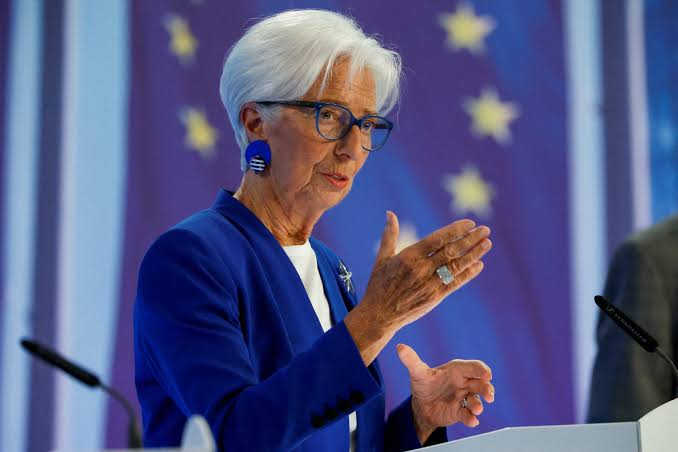
The head of the European Central Bank has signalled that the euro zone’s fight against energy-driven inflation will continue at a steady pace, not a sudden one. That is a message with direct consequences for borrowers, savers and household budgets across the currency bloc.
Speaking in Frankfurt on Monday, ECB President Christine Lagarde said this year’s price surge has yet to generate dangerous second-round effects, meaning wage and price spirals that feed inflation on their own. A moderate policy response therefore remains appropriate, she said.
She added that while the shock is too large for the central bank to simply look through, a measured reaction is the right way to keep inflation in check.
Inflation is well above target
The backdrop is uncomfortable. Euro zone inflation has already moved above 3% and may approach 4% by the end of the year. That is double the ECB’s 2% target. The surge has been driven largely by energy prices, which have risen with the conflict in the Middle East and the uncertainty around the Strait of Hormuz. Brent crude was trading near $107 a barrel on Tuesday.
Lagarde acknowledged that risks to inflation are skewed to the upside and that the outlook is highly uncertain. Earlier this year she warned that the longer energy prices stay high, the more likely they are to feed into broader inflation.
Two hikes so far
The ECB has already moved twice. It raised rates in June, its first increase since 2023, then again on 10 September, lifting the deposit rate by a quarter-point to 2.5%. It held rates unchanged in July, with the decision taken unanimously.
Markets expect more. Traders are betting on as many as four further rises over the coming year, on top of the two summer increases. What counts as a measured response is not defined, but economists say the first two moves, which came three months apart, are a reasonable guide.
On that reading, many economists expect the ECB to sit out its meeting on 29 October and act next in December, when it publishes new economic projections.
A resilient economy gives room to act
Lagarde struck an upbeat note on growth. She said manufacturing is performing solidly, the labour market remains robust and investment should support activity. That resilience is part of why the ECB feels able to raise rates without tipping the economy into trouble.
Not everyone agrees the policy is right. Some economists warned before the June decision that raising rates in response to an energy supply shock could be a mistake, since higher rates do little to bring down the price of oil. Trade unions have also criticised the moves, fearing that they could dampen growth.
What it means for your money
For households, the direction of travel is clear even if the pace is gradual.
- Variable-rate borrowers. Mortgages and loans linked to short-term market rates will become more expensive as the ECB tightens. This matters most in countries where variable-rate home loans are common, such as Spain and Portugal.
- Fixed-rate borrowers. People on fixed terms are protected until they refinance, but new fixed rates already reflect expectations of further hikes.
- Savers. Higher official rates should eventually lift returns on deposits, but banks often pass on increases slowly. Comparing accounts and asking for better rates can help.
- Everyday costs. With inflation above 3%, cash left in low-interest accounts loses purchasing power.
Practical steps
Financial advisers generally suggest a few simple checks when rates are rising:
- Find out whether your loan is fixed or variable, and when any fixed period ends.
- Work out how much your monthly repayment would rise if rates climbed a further half a percentage point.
- Compare savings accounts, especially those that pay a higher rate on balances you can leave untouched.
- Build or keep an emergency buffer, since energy bills remain unpredictable.
What to watch
The next milestones are the ECB’s October meeting, where a hold is widely expected, and the December decision. Energy prices will remain the swing factor. If oil eases, the case for further hikes weakens. If it keeps climbing, the pressure to act again will grow.
For now, Lagarde’s message is that the ECB intends to be steady rather than aggressive. That offers households some predictability, but not relief from rising borrowing costs.
This article is general information only and is not personal financial advice. Readers with specific concerns should speak to a licensed adviser or their lender.

2 comments
[…] Lagarde Says Measured ECB Rate Hikes Remain Appropriate… […]
[…] Lagarde Says Measured ECB Rate Hikes Remain Appropriate… […]