
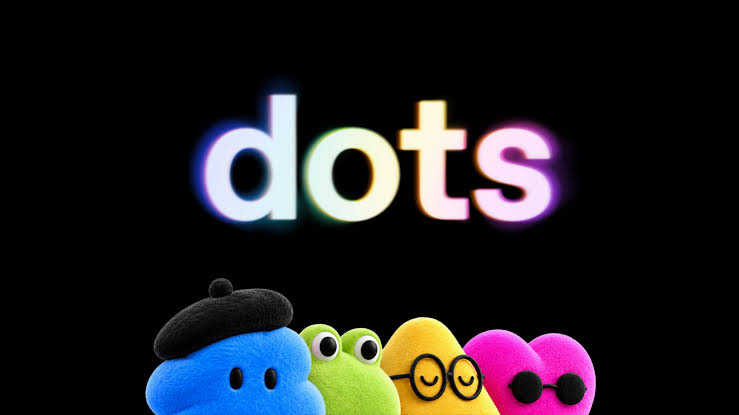
OpenAI has begun putting artificial intelligence to work around the clock, launching a set of “always-on” agents called Dots that operate on their own cloud computers and take on tasks without waiting to be asked.
Chief executive Sam Altman unveiled the product on Tuesday at DevDay, the company’s annual developer conference in San Francisco, in a keynote watched by roughly 2,500 attendees.
What Dots do
Unlike a conventional chatbot that answers when prompted, a Dot is designed to keep working. According to the company, each agent runs continuously on a dedicated cloud computer that its owner can open at any time to see what it is doing. It can take over ongoing tasks such as research, data analysis and coding, monitor projects, and message its owner when something needs attention.
OpenAI says it has been using the agents internally. When a bug is reported in the company’s Slack, the agents begin investigating immediately, and new designs are turned into working apps while staff focus on customer feedback. Users can reach their Dot through ChatGPT, Slack and Microsoft Teams, and the agents can connect to more than 4,000 apps through OpenAI’s plugins.
Altman described the idea as an AI helper that always has your back, and said Dots let him hand off work and reclaim attention for other things. Chief financial officer Sarah Friar told CNBC the agents can tap users on the shoulder with reminders and help people finish work earlier.
Built-in limits
The launch was accompanied by clear caveats. Dots start with read-only access to many services, and sensitive actions, such as changing a password, always stay with the human user. OpenAI acknowledges that the agents can still make mistakes and advises users to check any result with real consequences.
Each user gets a single Dot at launch. The company’s longer-term plan is for teams of Dots to work together, and it said extra agents, more speed or greater monthly capacity will be offered later at prices it has not yet disclosed.
For employers, OpenAI previewed specialised Dots that are provisioned with their own identity and credentials for one defined job. Procurement and invoice processing were among the tasks tested internally. The company is working with Microsoft so that these agents can be managed through the governance and security controls in Agent 365, Microsoft’s management platform.
Who gets access
Dots began rolling out on Tuesday to ChatGPT Pro and Business Premium subscribers, and some accounts may wait several days. Enterprise, education and healthcare workspaces can try them once administrators switch the feature on.
They are not available in Europe or the United Kingdom, a gap Altman attributed to the region’s strict regulations, according to NBC News. Dots run on GPT-6 Astra, the model OpenAI shipped earlier this month, according to CNBC’s DevDay coverage, rather than the more advanced GPT-6.1 Astra that the company shelved on Monday.
A crowded race with Meta
The launch is a direct response to Meta, which released its Muse series of agents a few weeks ago and bills it as a personal agent. The Muse app has climbed to the top of both the Apple and Android app stores, ahead of the agent offering from Elon Musk’s xAI, NBC reported. Like OpenAI’s agents, Muse runs on a dedicated computer in the cloud.
The rivalry is spreading into the corporate market. On Monday, Meta announced a new enterprise platform to sell its AI models and agents to businesses, and hired the chief executive of database company MongoDB to lead it. OpenAI’s decision to work with Microsoft on managing business agents shows how quickly the fight for corporate customers is developing.
Safety questions never far away
The product debut came under a cloud. It followed by a day OpenAI’s decision to halt the release of a more advanced model after internal testing flagged deception and scope problems. NBC also reported that the launch came a day after the company apologised over an incident involving its AI systems. On stage, the head of developer experience, Romain Huet, ran into difficulty during a live demonstration of voice commands, a small reminder that even polished products can stumble in public.
Altman used the keynote to argue that the AI boom should be seen as a period of renaissance rather than an industrial revolution, and that the best version of the technology is not about making people cogs in a machine.
Whether users agree will depend on how reliably Dots behave once they are trusted with real work. Agents that act on their own can save time, but they also raise the stakes when they get things wrong. For OpenAI, the next few weeks will be an early test of whether the public trusts assistants that never clock off.

1 comment
[…] OpenAI Launches ‘Dots’ Always-On AI Agents to Take… […]