
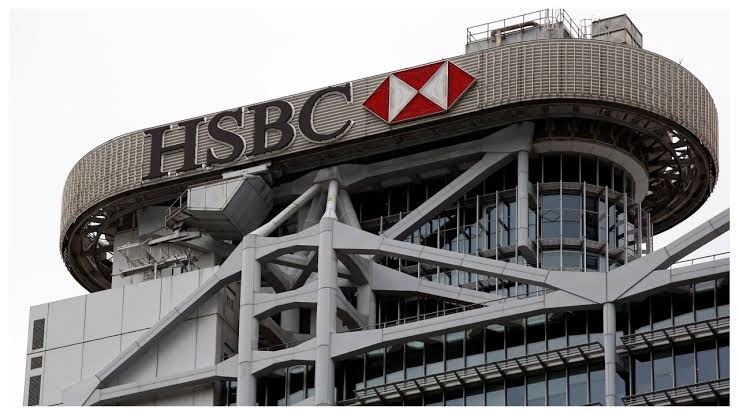
HSBC, Europe’s largest bank, has reported a sharp rise in third-quarter earnings, helped by higher interest rates, a lighter bad-loan bill and the absence of a big legal charge from a year ago. Pre-tax profit rose 32% from a year earlier to $9.6 billion, and the result largely met the expectations of analysts.
The numbers at a glance
The profit figure was $9.632 billion, up $2.3 billion on the same period of 2025. The consensus the bank compiled had pointed to about $9.69 billion, so the result was marginally below that estimate. Revenue climbed to $18.6 billion from $17.8 billion a year earlier.
Part of the improvement reflects an easier comparison. Last year’s quarter included $1.4 billion in legal provisions that did not recur this time. Stripping that out would narrow the headline growth rate, so readers should treat 32% as a combination of genuine progress and a favourable base.
Interest income does the heavy lifting
Higher rates have been a tailwind for lenders that earn more on loans and deposits. Net interest income reached $9.3 billion, up 6% year on year, supported by deposit growth and better yields on reinvested funds in the bank’s structural portfolio. Fee income from corporate and institutional banking and from wealth management also increased.
Rate rises have become a defining theme for banks this year as central banks respond to inflation pressures. HSBC’s wealth division also benefited from turbulent market conditions that brought in new clients. That is a reminder that periods of volatility can drive savers and investors toward large international banks.
Credit losses fall
A second positive was the cost of bad loans. Expected credit losses fell 17% to $800 million, helped by lower charges tied to Hong Kong’s property sector and the bank’s wealth businesses in the UK and Mexico. Hong Kong real estate has been a persistent concern for the bank, so a decline in related provisions will be read as a sign of stabilising conditions.
Returns for shareholders
HSBC completed a $1 billion buyback on 28 September and plans to start another of up to the same size, expected to finish before the full-year results. The board also declared an interim dividend of 10 US cents per share, unchanged from the previous quarter. HSBC shares rose 0.63% in Hong Kong after the announcement.
The steady dividend and repeated buyback suggest the bank is confident in its capital position while keeping its approach cautious. Investors who have followed HSBC through years of restructuring tend to prize this predictability.
Outlook and risks
The macro backdrop remains uneven. Interest rates are a double-edged sword for banks: higher rates help margins but can strain borrowers and slow lending. Oil near $115 a barrel and an unsettled Gulf region add another layer of uncertainty for a bank with deep trade and wealth links across Asia and the Middle East. Central banks in the United States, Europe and Japan all meet this week, and their decisions will shape the interest-rate environment that HSBC and its peers operate in.
For the moment, the bank has delivered a solid, if largely expected, set of results, with rising income, falling credit costs and steady capital returns. The question for the next few quarters is whether it can keep growing once the boost from last year’s legal charge fades and the rate cycle matures. Next Article
