
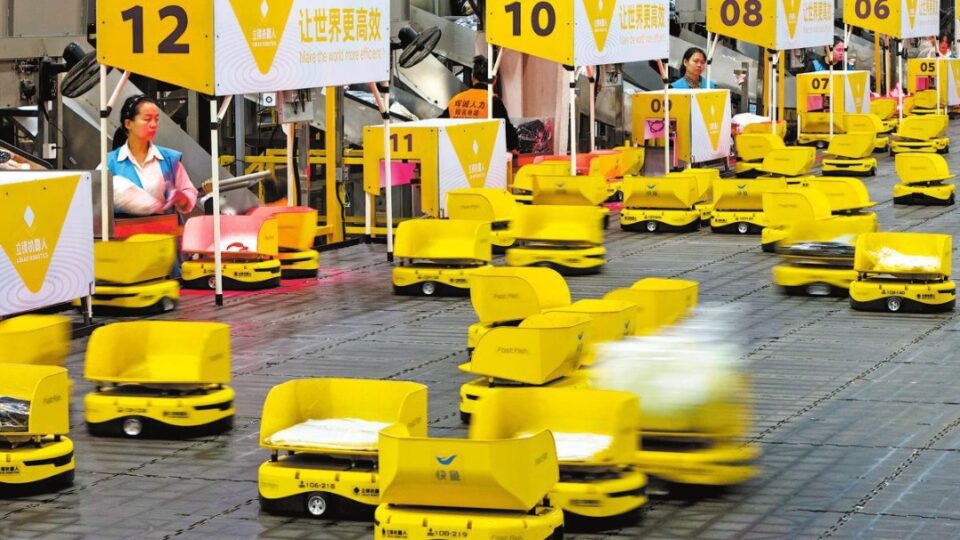
China’s Singles’ Day, the world’s biggest shopping festival, reaches its peak today. Many shoppers will find it looks quite different from the event they remember.
The sale, also known as Double 11 after its 11 November date, began in 1993 as an informal celebration of singlehood among students at Nanjing University. Alibaba turned it into a retail event in 2009. This year marks its 18th edition, and the trend is toward simpler prices, longer sales periods and more digital help.
A longer season
Singles’ Day is no longer a single day. JD.com opened its campaign on 12 October, and Tmall began presales on 15 October, with in-stock sales from 20 October running until 13 November. WeChat Shop is running its first official Double 11, from 12 October to 15 November. The most intense buying window runs from the evening of 10 November to midnight on 11 November.
Simpler discounts
Shoppers have long complained that the festival’s stacked coupons and complicated threshold rules were confusing. This year, Taobao and Tmall replaced many of them with an official instant discount applied at checkout, with no minimum spend to reach. Platforms have broadly moved to simpler rules and compressed schedules.
Tmall says a record one million brands and 72 million products are taking part, including 60,000 merchants joining for the first time. More than 1.2 million Taobao and Tmall merchants are also selling abroad, reflecting Alibaba’s push to widen the festival’s reach beyond China.
Beyond products
A notable shift is the growing focus on services. JD.com has highlighted more than 100 service offerings covering housing, travel and health, including cleaning, laundry and appliance installation. The company reported that orders in service categories grew more than 130 percent year on year during its opening week.
Market research points to a reason. A survey by iResearch found that 69 percent of consumers believe Double 11 would lose appeal if it offered only discounts. Many said they paid attention to new products and services designed around their needs.
AI and instant delivery
Artificial intelligence is playing a bigger role, with the major platforms promoting AI search tools and shopping assistants. Delivery speed is also a battleground. Last year, instant-retail platforms, where orders can arrive within the hour, generated about 67 billion yuan in Double 11 sales, up 138.4 percent, according to data firm Syntun.
The spending backdrop
Overall consumer demand in China has been cautious. Online retail sales of goods and services reached 13.48 trillion yuan in the first eight months of 2026, up 4.6 percent from a year earlier, according to official figures cited by Global Times.
Last year’s festival, tracked by Syntun from 7 October to 11 November, reached 1.695 trillion yuan across platforms, up 14.2 percent. That was a slowdown from the previous year’s 26.6 percent growth. Neither Tmall nor JD.com publishes its own total, so independent estimates have filled the gap, and some analysts have questioned the accuracy of third-party data.
What to expect
Final 2026 figures will not be available until the festival ends and data firms publish their estimates. When they arrive, analysts will look at three things:
- Whether growth continues to slow compared with last year’s 14.2 percent.
- How much of the spending comes from instant retail and services rather than traditional goods.
- Whether simpler pricing brings shoppers back who had been put off by complexity.
For shoppers outside China, the festival is also a preview of where online retail is heading: faster delivery, AI-assisted search and fewer gimmicks.
This article is for general information only.
