
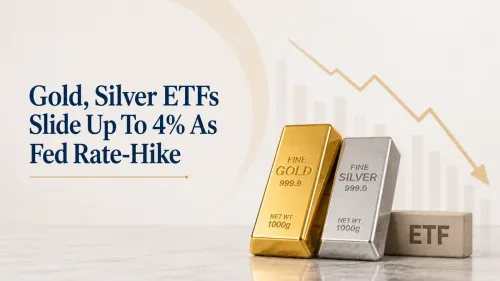
Gold and silver, assets that investors traditionally buy when the world looks risky, have been sold hard as markets bet the US Federal Reserve will raise interest rates again next month. The reversal is unusual at a time of war in the Middle East and stock market turbulence, and it shows how strongly rate expectations are driving the trade.
A sharp Friday drop
On Friday, gold fell 3.31% to about $3,875 an ounce, while silver dropped 5.53% to around $49.07. Silver slipped below $50 for the first time since November 2025. One fund-flow review described the week as gold’s worst since June.
Monday brought a modest bounce. Gold recovered to near $3,895 in early Asian trading. Gold and silver also rose on India’s commodity exchange, though one report warned the overall trend remains volatile and asked whether the rebound was a genuine reversal or a brief pause.
Why a hike hurts bullion
The explanation is simple. Gold pays no interest, so when rates rise, bonds and cash become more attractive. A Fed that may tighten policy makes metals that pay no interest less appealing, so investors sold gold alongside shares rather than buying it as shelter.
The central bank has left little doubt about the direction of debate. The Fed held its benchmark rate at 3.75% to 4.00% on Wednesday, but two policymakers dissented in favour of an immediate increase. Markets now assign around a 75% probability to a hike in December. Other estimates put the odds closer to 80%.
Oil and inflation keep pressure on
Energy prices are a major reason. Crude is trading above $100 a barrel, and US inflation has remained above the Fed’s 2% target for 67 consecutive months. Oil eased on Monday on hopes that talks could end the Iran war, which offered a small cushion, but prices remain high enough to keep inflation worries alive.
The jobs report is the next test
All eyes now turn to Friday. The October nonfarm payrolls report is due on November 6. A strong reading would likely harden expectations of a December hike and add to the pressure on precious metals. A weak report could do the opposite, pulling yields lower and giving bullion room to recover.
Analysts see the longer-term story differently from the short-term swings. One outlook expects a recovery towards 2027, supported by central bank purchases, inflows into exchange-traded funds and an eventual easing of the Fed’s hawkish stance, alongside a softer dollar and lower yields. That view assumes inflation cools and the Fed stops tightening, which is far from certain.
Festive buyers feel the shift
The price drop is also being felt by consumers. In India, buying gold around Diwali and Dhanteras is a deeply rooted tradition. The World Gold Council expects lower prices to support jewellery spending in the festive and wedding season, though elevated price levels may still limit volume growth. Commentators have urged caution. One report advised shoppers that a falling price is not necessarily a cheap price, because final domestic prices also depend on the rupee-dollar exchange rate, import duties, taxes and making charges.
The bottom line
Precious metals are caught between two forces: geopolitical risk that normally supports them, and a hawkish Fed that does the opposite. For now, rate expectations are winning. Investors will be watching Friday’s jobs data, oil’s reaction to the Iran talks and any further signals from Fed officials to judge whether gold and silver have found a floor or still have further to fall.
