
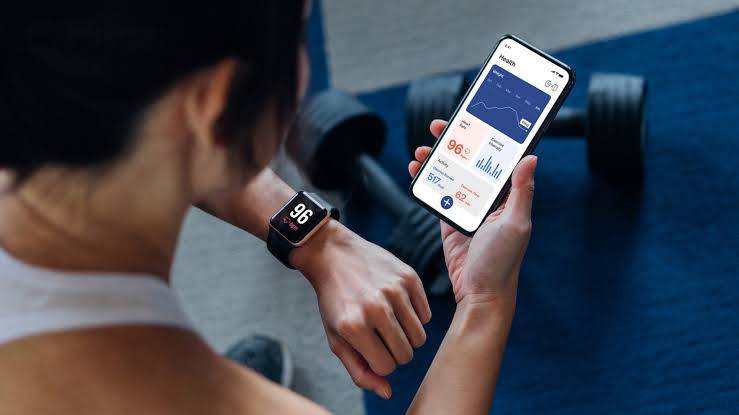
Do fitness trackers really get people moving? A new American study suggests that those who use them are more likely to hit recommended exercise targets. Its authors are careful to say that this does not prove the gadgets are responsible.
Researchers at the University of Mississippi analysed responses from more than 5,000 US adults in the 2024 Health Information National Trends Survey. Their findings were published in the journal Frontiers in Physiology.
The gap the study set out to explain
The motivation is a familiar problem. Regular physical activity lowers the risk of chronic disease, yet the US Centers for Disease Control and Prevention reports that fewer than one in four Americans meet the weekly targets for both aerobic and muscle-strengthening exercise.
Federal guidelines call for at least 150 minutes of moderate aerobic activity a week, plus muscle-strengthening sessions on at least two days.
The team wanted to know whether the way people use technology, rather than simply owning it, is linked to meeting those goals. Lead author Heejun Kim and colleagues grouped participants by their patterns of use across tools such as step counters, heart rate monitors, health apps and online patient portals.
What they found
About one in three people who used a variety of digital health tools met both the aerobic and strength guidelines. The same was true of people who relied mainly on wearable activity trackers.
By contrast, only around one in five met both targets among those who mainly used patient portals, or who had little engagement with digital health tools at all.
The differences held even after the researchers accounted for age, income and education. Participants in the first two groups were still more likely to be meeting both guidelines than those who rarely used such tools.
Correlation, not causation
The authors are open about the limits of their work. The survey captures a single moment in time, so it cannot show whether technology prompts people to exercise.
Kim said the reverse could just as easily be true: people who are already active may simply be more interested in tracking devices. The study shows a relationship, he explained, but does not prove cause and effect.
That caution matters for anyone tempted to treat a smartwatch as a shortcut to fitness. Co-author Minsoo Kang noted that using more tools does not automatically mean being more active. What counts, he said, is how people engage with them and how they fit into daily routines.
Who risks being left behind
Perhaps the most important finding is about the people at the other end. Those who used the fewest digital health tools were also the least likely to meet both guidelines. That group included a higher share of older adults and people with lower incomes.
Co-author Ju-Pil Choe warned that leaning too heavily on apps and wearables to promote exercise could leave behind the very people who might benefit most from extra support. Public health programmes that assume everyone has a smartphone or a smartwatch may miss them.
What this means for everyday life
For readers, the study offers a few sensible takeaways.
- A tracker can be a useful prompt. A step count or a weekly goal in an app may help some people notice how much they move.
- It is not a substitute for a plan. Meeting the guidelines still means fitting in around 150 minutes of moderate activity and at least two strength sessions each week.
- Low-tech options work too. Walking groups, community classes and advice from a doctor or trainer remain effective for people who prefer not to use devices.
The researchers say their findings could help fitness trainers and healthcare providers tailor advice to individual needs, whether that means setting goals through an app or offering more traditional guidance.
The bigger picture
Wearables are now a routine part of modern life, and the market for wellness products keeps growing. This study adds a note of realism. Technology may help motivated people stay on track, but the biggest gains in public health will probably come from making sure that every group, including those without the latest devices, has a practical route to being active.
Anyone starting a new exercise routine, particularly with a health condition, should check with a doctor first.

1 comment
[…] Fitness Tracker Users More Likely to Meet Exercise… […]