
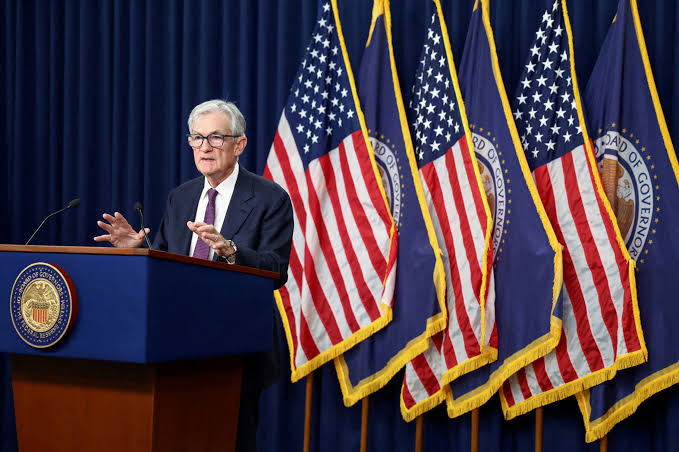
The Federal Reserve is edging closer to a tougher stance on inflation. Minutes released on Wednesday show that policymakers who chose to hold interest rates steady last month were already preparing the ground for more increases.
At the 27–28 October meeting, the Fed’s rate-setting committee voted 10 to 2 to keep its benchmark rate in a range of 3.75% to 4.00%. The two dissenters wanted a quarter-point rise. According to the record, nearly every participant judged that further hikes would probably be appropriate in the months ahead.
A “close call” on the hold
The minutes suggest the decision to wait was finely balanced. Some officials who backed the pause described it as a close call. Others said they would have been comfortable with an increase.
Several argued that markets had already priced in tightening for December and next year, which made waiting less risky. The Fed delivered its first rate rise in more than three years in September, and the October pause was meant to give officials time to see how that move was working through the economy.
Why inflation is the problem
Officials described price pressures as broad-based, spreading across goods and services rather than sitting in a few categories. Staff estimates put the 12-month rise in the Fed’s preferred inflation gauge, the personal consumption expenditures price index, at 3.6% in September. The core measure, which strips out food and energy, was around 3.1%. Both are well above the 2% target.
Policymakers still expect inflation to fall sharply in 2027 and beyond. In the meantime, a number of them see the risks as tilted toward prices staying too high for too long.
Is a half-point hike possible?
The minutes show that a couple of participants thought a rise of more than 25 basis points could deserve consideration in December if incoming data are unfavourable. The next policy meeting is on 8–9 December.
Fed Governor Christopher Waller took that argument public on Wednesday. In an interview with CNBC, he said he favours a half-point increase and that the central bank may need to shock markets to get its message across. St. Louis Fed President Alberto Musalem said the economy will likely require several increases before the spring of 2027.
Not everyone is in a hurry. Regional Fed presidents Beth Hammack of Cleveland and Lorie Logan of Dallas have backed a more gradual approach. Investors, for now, still expect a quarter-point hike in December, but the odds of a larger move have risen.
The politics add another layer. The Trump administration has argued that elevated inflation is temporary and that the Fed should look past it. The minutes show little sign that officials share that view.
The AI factor
One of the more unusual themes in the minutes is artificial intelligence. Officials expressed a high level of concern about the AI investment boom as a possible source of inflation, because heavy spending on data centres and equipment can push up demand and prices. They also discussed the financial stability risks if those investments were to disappoint, with the potential for losses to ripple through lenders and markets.
What it means for households and banks
For ordinary borrowers, the direction of travel is clear. When the Fed raises its benchmark rate, the cost of many loans tends to follow. Credit card rates move quickly, and rates on variable-rate and new fixed loans generally rise as well. Mortgage rates are shaped more by longer-term bond yields, but a determined Fed can push those up too.
Savers can benefit, since banks usually pay more on savings accounts and certificates of deposit when rates climb, though they do not always pass on the full increase.
For banks, higher rates can widen the gap between what they earn on loans and what they pay on deposits. But they also raise the risk that borrowers will struggle to repay, and they can reduce the value of older bond holdings. That is why the Fed’s comments on financial stability matter.
What comes next
Markets reacted by marking down hopes of easier policy, and share prices wobbled on Wednesday. The next major clues will come from the data, including inflation and jobs reports, and from speeches by Fed officials before the December meeting.
This article is for information and is not financial advice.

1 comment
[…] Fed Officials Expect More Interest Rate Hikes, Minutes… […]