
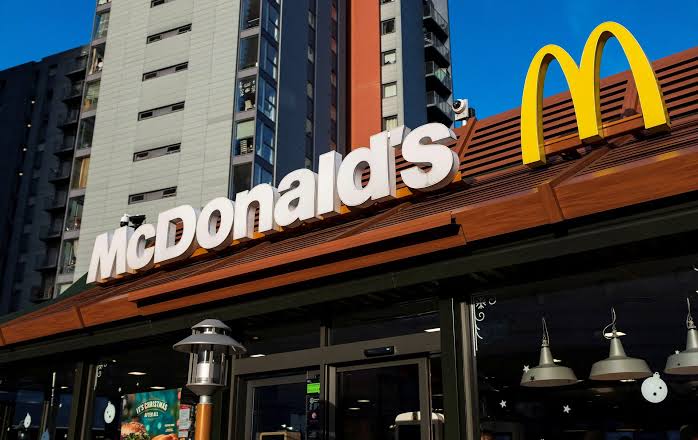
McDonald’s has reported its first fall in US same-store sales in more than a year, a sign that even the world’s biggest burger chain is feeling the strain of cautious, price-sensitive customers. The company said on Wednesday that US comparable sales fell 0.2% in the third quarter, ending a run of five straight quarters of growth.
A smaller drop than feared
The decline was less severe than Wall Street had predicted. Analysts expected a fall of around 0.5%. Globally, comparable sales rose 1.5%, slightly above forecasts of 1.4%, though well below the 3.6% growth in the same period last year.
Revenue was about $7.16 billion, up 1% and below analyst expectations of roughly $7.3 billion to $7.4 billion. But the bottom line was stronger. Adjusted earnings reached $3.57 per share, ahead of the $3.40 forecast, and net income rose 9% to $2.49 billion. Systemwide sales, which include franchised restaurants, grew 4% to more than $38 billion. The shares rose after the report.
Fewer customers, bigger cheques
The US result tells a familiar story of the current consumer. Fewer people walked through the doors, but those who did spent a little more per visit. Higher average cheques mostly offset lower traffic. Data from Placer.ai, cited by Reuters, indicated that visits to McDonald’s restaurants fell around 4.6% in the quarter compared with a year earlier.
Lower-income diners have been the main concern. Analysts and franchisees have said that people on tighter budgets have been eating out less often, and that promotions were crowded and sometimes confusing. One analyst argued that the company still needs to fix its entry-level value offering, calling it the missing piece.
The value reset
McDonald’s has responded by reshaping its value strategy. Executives admitted that its under-$3 menu did not perform as hoped, partly because about a third of franchisees did not take part, which hurt execution. The company is replacing it with a mix of existing platforms, including $5 and $6 meal deals, its Extra Value Meals and app-based offers.
Early signs are encouraging. Unit sales of top Extra Value Meals have risen about 7% from a year ago. McDonald’s restored a broader range of regional and national offers in its mobile app, including a $2 breakfast sandwich and free fries with a $1 minimum purchase. Chief Financial Officer Ian Borden said US same-store sales returned to growth in September after falling in July and August.
Chief Executive Chris Kempczinski said the company is encouraged by improvement as the quarter progressed following its intervention on value. The company is also testing two new value menu formats in US restaurants, with a wider rollout planned for early 2027. Borden, however, stopped short of promising a better US performance in the fourth quarter.
Strength overseas
International markets cushioned the blow. Developmental licensed markets, which include Japan and China, delivered comparable sales growth of 4.2%, comfortably ahead of forecasts of about 2.1%. The international operated division, covering countries such as Australia and Germany, grew 1.4%, with strong performance in Germany and Australia offsetting weakness in France, where protests that began in September hurt sales.
The United States remains critical, accounting for roughly 38% of revenue, which is why even a small slip draws attention. Meanwhile, the company’s loyalty programme continues to expand. Systemwide sales to loyalty members across 70 markets topped $11 billion in the quarter and $41 billion over the past 12 months, showing how central digital engagement has become.
What it means for consumers and the industry
For diners, the message is that deals are likely to remain a key feature of fast-food menus. Rivals across the industry have also leaned on bundles, loyalty rewards and discounts as customers become choosier about where they spend.
For the industry, McDonald’s results offer a read on the state of the lower- and middle-income consumer. A quarter of slightly negative traffic suggests that many households are still balancing budgets carefully, even if overall spending remains resilient.
What to watch next
Investors will look for evidence that the new value formats attract customers without squeezing franchisee profits too much. They will also watch whether September’s rebound lasts into the holiday period. Much will depend on prices, promotions and the broader economy. This article is for information only and is not investment advice.
