
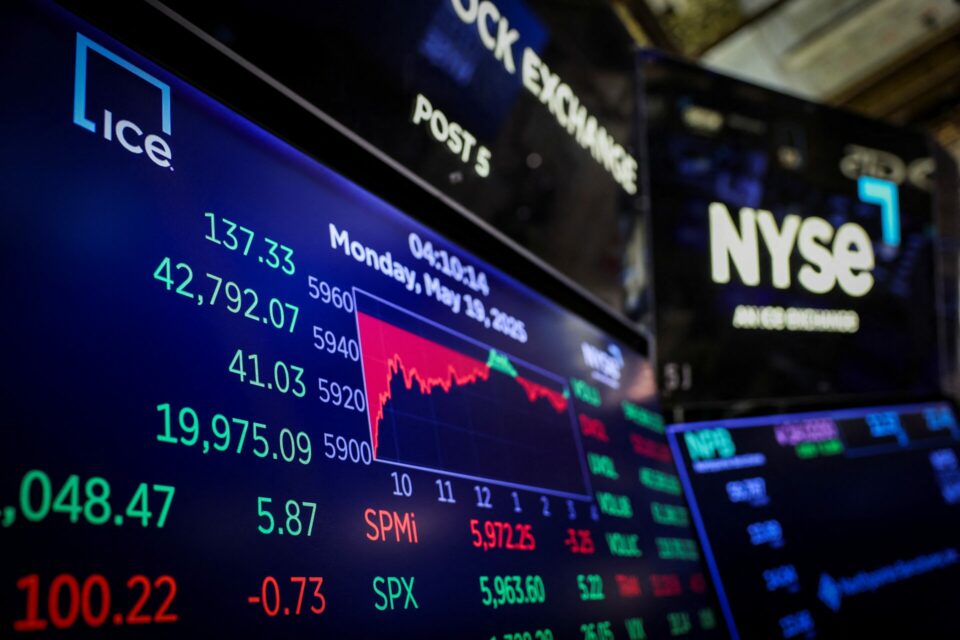
US stocks finished Thursday higher, but the gains came from an unusual direction. Investors turned away from the technology names that have led the market this year and bought into blue-chip companies, sending the Dow Jones Industrial Average to its highest close in a month.
The Dow gained 556.21 points, or 1.08%, to settle at 52,177.69. The S&P 500 rose 0.33% to 7,744.06, while the Nasdaq Composite managed only a 0.08% gain, closing at 26,713. Smaller companies did better: the Russell 2000 climbed 1.38%. The VIX gauge of expected volatility fell by about 2.4% to 16.46. Eight of the S&P 500’s eleven sectors ended higher.
A rotation rather than a rally
The headline numbers hide a market that changed direction during the day. Stocks opened lower after the producer price index for September, which jumped far more than forecast, reinforcing the worries about inflation that a hot consumer price report had stirred a day earlier. The Nasdaq was down about 0.9% in mid-morning. The previous session had been punishing: the Nasdaq lost nearly 2%, and the S&P 500 fell more than 1%.
Buyers then stepped in, though not for the market’s favourites. The Dow is price-weighted and heavy in financial, healthcare, industrial and consumer companies, so it benefited as money moved toward steadier businesses with dependable cash flow. Strategists described a rotation away from capital-intensive AI infrastructure names, driven by concern about rising borrowing costs.
Chips remain under pressure
Semiconductors stayed at the centre of the unease. The Philadelphia semiconductor index dropped more than 4% at one point before narrowing its decline to 0.88% by the close. That was still its seventh consecutive losing session. IG analyst Axel Rudolph noted that the Nasdaq 100 had slipped more than 5% below its record high to a three-week low, with worries about AI competition, debt levels and inflation all weighing on technology shares.
The weakness came on the same day Taiwan Semiconductor Manufacturing Co. delivered a strong set of results. The chipmaker’s net profit rose by nearly 70% from a year ago, and its fourth-quarter revenue outlook topped expectations. Its shares nevertheless closed lower, a sign of how high expectations have become. Investors seem more concerned about the cost of financing the AI build-out than about demand for the chips themselves.
Banks do the heavy lifting
Financials contributed substantially to the Dow’s advance. Third-quarter results from the biggest US lenders this week have been mixed. Goldman Sachs beat forecasts by a wide margin on the strength of equities trading, while JPMorgan Chase posted a rare earnings miss and Bank of America reported a lower profit after a regulatory penalty. Even so, the sector’s resilience attracted buyers. Executives struck a cautious tone, with several pointing to sticky inflation and rising interest rates as risks.
Treasury yields fall despite inflation surprise
Perhaps the most surprising feature of the session was the bond market. Treasury yields declined noticeably even after the inflation data came in hot. That helped growth-sensitive sectors steady themselves and suggests some investors expect the Federal Reserve’s response to be measured rather than aggressive. The Fed raised rates by a quarter-point in September and is widely expected to consider another increase before the year ends.
Friday’s focus: the Fed chair
Attention now shifts to Federal Reserve Chair Kevin Warsh, who was due to speak with IMF Managing Director Kristalina Georgieva in Bangkok. Futures were mixed ahead of the US open. Traders will look for any hint on whether the central bank is ready to raise rates again at its October meeting. With the Fed about to enter its quiet period, Friday’s remarks are likely to be the last major word from its leadership before the decision.
Market watchers say two concerns dominate: how persistent inflation proves to be, and how sustainable debt-funded spending on AI is. Until one of them eases, the pattern seen on Thursday of strength in established companies and caution in tech could continue. The Dow’s move to a one-month high is a notable milestone, but with the Nasdaq still well off its peak, it reflects a shift in leadership more than a broad surge in confidence.
