
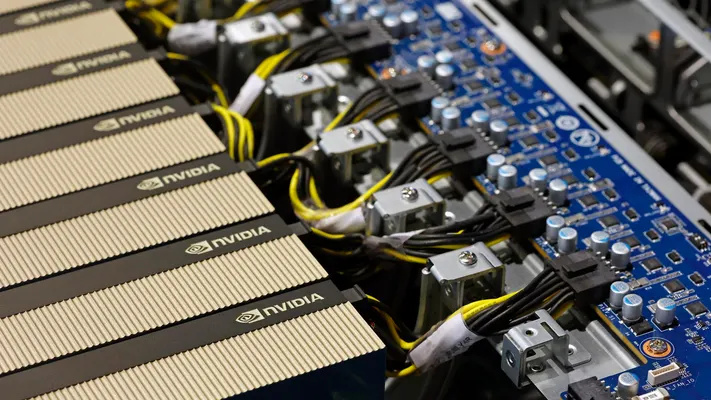
Taiwan is preparing to treat the smuggling of advanced artificial intelligence hardware to China as a crime, a significant tightening of its export rules that brings the island closer to US efforts to contain China’s access to leading-edge chips.
Economic Affairs Minister Kung Ming-hsin told Bloomberg News that Taipei plans to add AI servers and cutting-edge semiconductors to its list of controlled commodities. Once the measures take effect, he said, shipping restricted AI hardware to China will become a criminal offence under the Foreign Trade Act. It was not immediately clear when the new rules would come into force.
From a blacklist to a blanket approach
Until now, Taiwan’s controls have worked largely by naming specific companies. Huawei and SMIC were added to the island’s list of strategic high-tech commodities in 2025, which meant Taiwanese firms needed a permit before selling to either. Other Chinese buyers were generally not covered, unless the chips travelled through supply chains already restricted under American rules.
The plan described by Kung would shift that approach by treating restricted AI hardware as controlled no matter who in China is buying. Taiwanese authorities have already pursued alleged smuggling cases this year, according to reporting on the issue. A dedicated criminal provision would let prosecutors bring charges directly rather than relying on forgery or fraud statutes.
A price of closeness to Washington
The announcement fits into the wider relationship between Taipei and Washington. In January, the two sides agreed a trade deal that lowered US tariffs on most Taiwanese goods from 20% to 15%, putting the island on a par with Japan and South Korea. In return, Taiwanese companies pledged $250 billion toward US semiconductor, energy and AI projects, with a further $250 billion in credit guarantees to support future construction.
Taiwan Semiconductor Manufacturing Co. has been central to that effort. Industry reports put its total American investment commitment at $265 billion, funding additional advanced fabrication plants in Arizona. Against that backdrop, strict policing of chip diversion looks less like an optional extra and more like a condition of staying in good standing with the Trump administration, which has made restricting China’s access to top-tier semiconductors a pillar of its strategy.
The commercial stakes for chipmakers
TSMC manufactures the processors that power the world’s most advanced AI systems, and companies such as Nvidia and AMD design many of them. China was once a major source of revenue for both designers, though American licensing requirements have already cut into those sales. Gray-market channels have continued to move some hardware despite Washington’s rules, and those are the routes the Taiwanese measure appears aimed at.
The announcement arrives at a delicate moment for the sector. TSMC reported this week that its net profit rose by almost 70% from a year earlier and issued fourth-quarter revenue guidance that beat expectations. Even so, its shares fell, and the Philadelphia semiconductor index has slid for seven sessions in a row. Investors are weighing worries about inflation, higher borrowing costs and the large amounts of debt taken on to build AI data centres. Tighter controls add one more variable to a market already sensitive to geopolitics.
Closing an enforcement gap
For regulators, the main appeal of the change is practical. Existing export law was written for an earlier era and offered few tools to deal with cases involving servers and chips worth very large sums. A new offence would give investigators and prosecutors a clearer legal footing, and it would give companies a stronger reason to monitor resellers and logistics partners.
Compliance teams at Taiwanese manufacturers and component suppliers should expect closer scrutiny of distributors and shipping routes. Firms in third countries that have acted as transit points may also face pressure to show where equipment ends up.
What remains unclear
Several details are still to be settled. The final list of controlled items, the penalties, and the timeline for passing and applying the law have not been spelled out. Beijing has not yet responded in the reporting available so far. It has criticised past US and allied export controls as attempts to hold back its technological development.
What is clear is the direction of travel. By putting criminal penalties behind its export rules, Taiwan is signalling that it intends to be an active enforcer, not merely a bystander, in the contest over who gets access to the most advanced computing hardware.
