
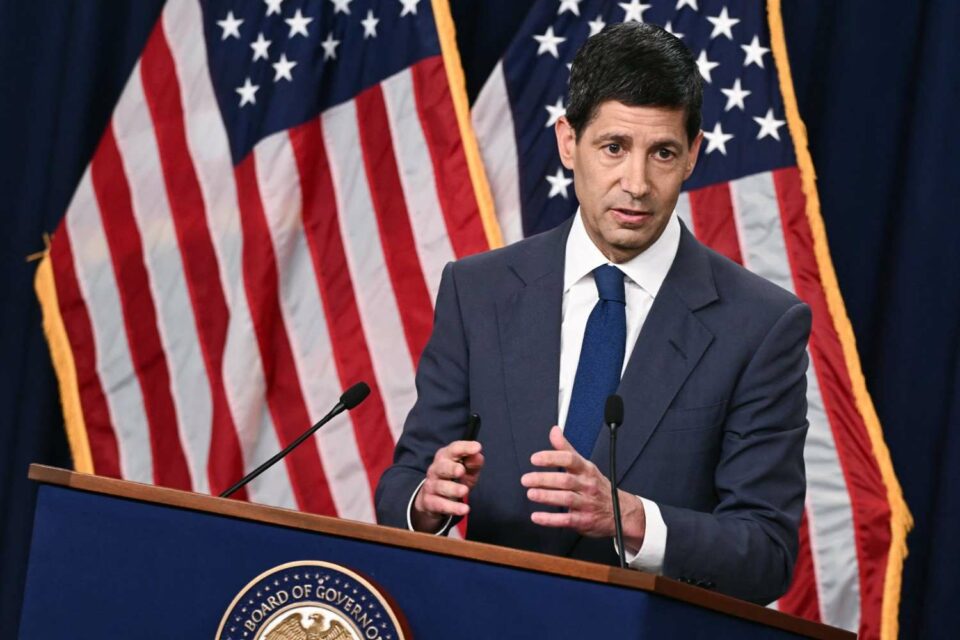
Federal Reserve Chair Kevin Warsh declined on Friday to say whether the US central bank will raise interest rates again this month. This came just after a hotter-than-expected reading on producer prices strengthened the case among economists for further tightening.
Speaking at the annual meetings of the International Monetary Fund and World Bank, Warsh said he does not prejudge policy decisions. He would not preview what the Fed might do at its remaining meetings in October and December. The remarks, delivered in a fireside conversation with IMF Managing Director Kristalina Georgieva, gave markets little new to work with at a moment when many were hoping for a clue.
A Fed that no longer telegraphs its moves
Warsh said the Fed had been clear that it would deliver price stability, and that it withdrew “a dose of accommodation” about a month ago. He presented the refusal to preview decisions as a deliberate change of approach rather than a dodge. The Fed’s habit of nudging markets toward its next move, known as forward guidance, is something he said belongs to the past.
For traders, that removes a familiar crutch. Each new inflation report now carries more weight, because the central bank will not soften the blow with advance hints.
The data behind the caution
The Fed raised its benchmark rate by a quarter-point in September, to a range of 3.75% to 4.00%. It was the first increase in three years. Minutes from that meeting showed most officials expect another rise will probably be needed before the year ends.
Data since then has done little to argue otherwise. The producer price index for September climbed 1.3% on the month, against forecasts of roughly 0.5%. Annual producer inflation reached 6.3%, the fastest pace since 2022 and well above the 5.3% to 5.4% economists had expected. A consumer price report earlier in the week had also overshot forecasts.
Analysts began reworking their estimates for the Fed’s preferred inflation gauge almost immediately. Wall Street forecasts gathered by CNBC point to a rise of about 0.32% in core personal consumption expenditures for September. That would lift the annual core rate to roughly 3.1%, up from about 3.0% in August. Both headline and core measures have sat above the Fed’s 2% target since 2021, and price gains have quickened since the conflict involving Iran began.
Alex Pelle, a senior US economist at Mizuho Securities, said the picture is “not benign” and that the economic data alone offers little reason for the Fed to hesitate. Warsh has previously suggested that one test for holding off on a hike would be confidence that inflation is returning to 2% in a reasonable time. This week’s numbers provided little of that.
Markets and households feel the pressure
Currency markets treated the Bangkok remarks as mildly dollar-negative. The euro gained and the Australian dollar firmed to around 0.6950 against the greenback. Treasury yields steadied after a steep fall on Thursday, when bond investors seemed to look past the hot producer data.
The stakes reach well beyond trading screens. Another rate rise would raise borrowing costs over time for mortgages, car loans and credit cards. It would also deepen a political rift: President Donald Trump has repeatedly urged the Fed to cut rates and criticised the rate-setting committee after September’s increase. He has nonetheless expressed support for Warsh, whom he appointed earlier this year.
AI as both pressure and promise
Warsh devoted much of his time to artificial intelligence. He said the surge in investment driven by the technology is one of the forces adding to inflation today. Even so, he called AI among the most consequential changes to the US and global economy in his lifetime. He expects it to bring a “huge benefit” in the longer run.
He also argued that AI could change how central banks work. Policymakers now rely on lagging data and older models to judge underlying price trends, he said. Within a few years, better analytical tools could let them draw on far more information, far faster. The Fed has set up a task force on AI-related issues, and it is due to meet on November 16.
What to watch next
The Fed is about to enter its customary quiet period before the October policy meeting, so officials will soon stop speaking publicly. The next major signal will be the September PCE report later this month. If it matches forecasts, expect fresh debate over whether a second hike in 2026 is a question of when, not whether.
Global finance chiefs gathered in Bangkok have named the worldwide rise in prices as a leading concern. On Friday, the head of the world’s most influential central bank offered them reassurance on his intentions but no map of his next move.
