
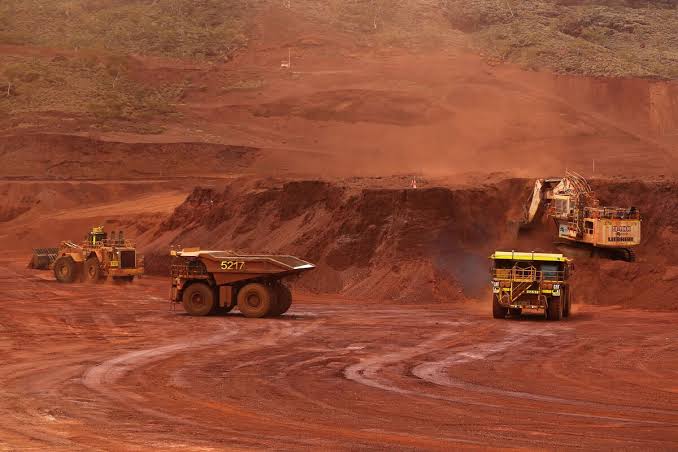
The world’s fourth-largest iron ore miner is in an unusual position: it is digging and shipping the product, but not all of it is being sold. Fortescue’s quarterly report on Thursday laid bare the cost of a long-running negotiation with China’s state-backed ore buyer, and investors responded by marking the shares down about 4 percent.
The Fortescue China iron ore standoff is now one of the biggest uncertainties hanging over Australia’s resources sector.
The numbers behind the gap
For the three months to September 30, Fortescue shipped 46.8 million tonnes of iron ore, including 2.5 million tonnes from its Iron Bridge magnetite project. That was 6 percent lower than a year earlier and 11 percent below the previous quarter, partly because of scheduled maintenance and a large shutdown at its port operations.
Sales, however, came in at just 42.9 million tonnes, almost 4 million tonnes short of shipments. The company attributed the difference to its ongoing negotiations with China Mineral Resources Group, known as CMRG. Inventory built up during the quarter, and Fortescue has said further stock build is expected in October.
Costs also rose. The cost of producing a tonne of hematite ore climbed to about US$21.98, from US$18.17 a year earlier, while the realised price averaged just under US$80 a tonne. The company ended the quarter with US$3.2 billion in cash.
Who is CMRG, and what does it want?
CMRG was created in 2022 to pool the iron ore purchasing of China’s domestic steel industry. The aim is to give Chinese mills more bargaining power against the handful of global suppliers that dominate the seaborne market.
Earlier this year, CMRG reportedly asked some steelmakers to stop buying Fortescue’s main ore product while annual supply talks were under way, a high-pressure tactic that has dragged on for the better part of a year. It has also sought a larger role in contract negotiations with other major miners.
Fortescue is more exposed than its peers. Roughly 90 percent of its ore goes to China, according to market commentary, which makes it less diversified than BHP and Rio Tinto. The company has said it will not finalise sales on terms it considers unacceptable.
Guidance on a knife-edge
Fortescue left its guidance for the 2027 financial year unchanged, with shipments of 197 million to 207 million tonnes, but it carries an important caveat: the figures are subject to the outcome of the CMRG talks. Analysts report that if a settlement is not reached by the end of the year, the company may have to lower production guidance, in effect mining less ore.
Shares have fallen about 34 percent since the start of the year and have erased the gains of the past 15 months. The broader iron ore market adds to the pressure, with the benchmark price hovering near US$91 a tonne.
Bright spots
There was some positive news. Fortescue declared a first ore reserve at its Blacksmith project of 196 million tonnes at an average grade of 58 percent iron, which the company says will help sustain production as older mines mature. Its green energy projects also advanced during the quarter.
But those are longer-term stories. For investors, the near-term question is simpler: how long can Fortescue hold out?
What happens next
Both sides have reasons to settle. China’s mills need Pilbara ore, and Fortescue needs the revenue. But each wants better terms, and neither wants to be seen to blink first. The practical effect is that Fortescue’s earnings depend as much on diplomacy and negotiation as on geology and shipping schedules.
Watch for any sign of movement before December. A deal would likely lift the shares quickly. Failure would force Fortescue to rethink its output and could ripple across Australia’s export earnings, which depend heavily on iron ore.
