
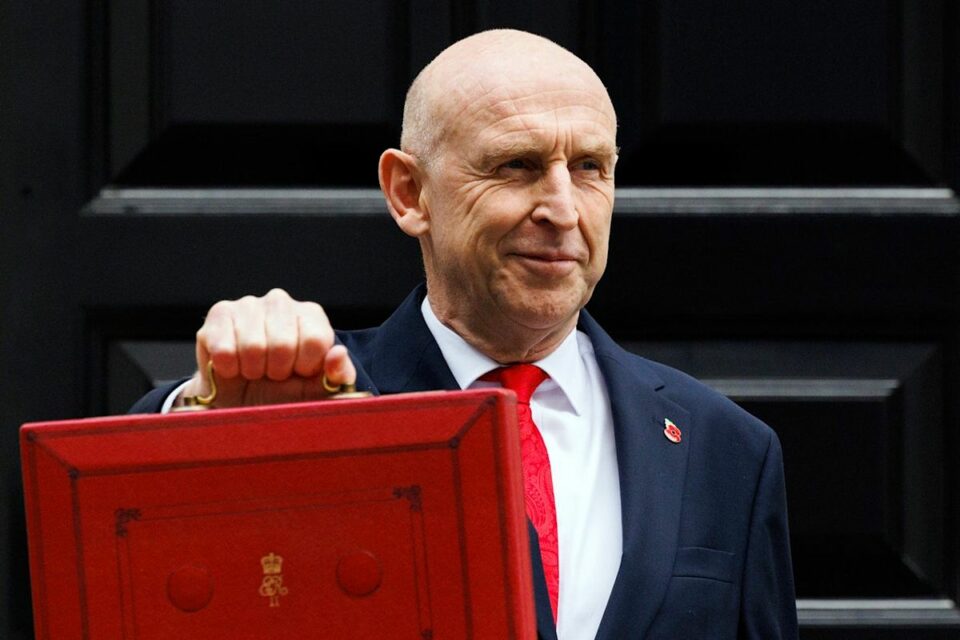
Chancellor John Healey asked Britain’s banks to pay more on Wednesday to fund help with household energy bills. The increase turned out smaller than the City had feared, and bank shares rallied.
Delivering his first Budget for Prime Minister Andy Burnham’s government around 12:30 p.m., Healey said the surcharge on bank profits will rise by three percentage points to 6% for 15 months. The charge sits on top of the 25% corporation tax rate, starts in January, and is due to end in March 2028.
Banks pay, but less than feared
Reports earlier this month had suggested the surcharge could return to 8%, the level it stood at until 2023, when it was cut to 3%. Those reports pushed bank shares lower. Bloomberg reported on Wednesday morning that the rise would be temporary and below 8%, and the shares had already climbed by about 2% before the Chancellor stood up.
After the speech, Lloyds Banking Group, NatWest and Barclays rose between roughly 3% and 4%. Lloyds closed in on 104p, Barclays around 438p and NatWest about 661p. HSBC was broadly flat.
The Office for Budget Responsibility (OBR) estimates the higher rate will raise around £1.5 billion, with about £1 billion arriving in 2027-28. It also assumes some banks will shift profits out of the UK in response, costing roughly £190 million, though it says the size of that effect is uncertain.
The surcharge applies to banking profits above £100 million, so domestic lenders are most exposed. Around 85% of Lloyds’ and NatWest’s group profits are eligible, compared with about a third at Barclays and a fifth at HSBC.
Healey told MPs that Britain’s banks make a huge contribution and that he was asking a bit more of them to provide breathing space for families. Angeline Ong, a senior analyst at IG, said the measure was gentler than markets feared but would still eat into profits and investment capacity. She added that some of the cost could be passed on to customers through higher borrowing costs or less generous savings rates.
What households get
The money will help pay for a package aimed at energy bills:
A £100 payment will go directly into bank accounts for millions of people, at a cost of £2.6 billion.
Standing charges on household gas bills will be scrapped from 2027 and folded into unit prices. The Treasury said the change affects around 23 million homes. Electricity standing charges stay in place.
Relief from VAT on electricity is extended from March to July.
The 5p cut to fuel duty is extended until July 2027, and red diesel stays at its lowest rate in more than two decades.
Import tariffs on more than 100 everyday products are being removed.
The Chancellor also surprised observers by announcing a new type of ISA, with details to follow.
A thinner cushion
Healey kept to the government’s fiscal rules and its pledge not to raise income tax, but the OBR’s forecasts made for sober reading. Headroom against the fiscal rules fell to £15 billion from £23.6 billion in March. The watchdog cut next year’s growth forecast to 1% from 1.6% and raised its inflation forecast. Borrowing is expected to be more than £11 billion a year higher as a result, and the tax burden is on course to reach a record 42.9% of national income by 2031-32.
Markets took the numbers in stride. The ten-year gilt yield fell about 3 basis points to around 5.31%, sterling was little changed, and the FTSE 100 rose 0.3%. Most of the headline measures had been signposted before the speech, so the main new information came from the OBR’s economic forecasts.
What it means for customers and savers
For ordinary account holders, the surcharge does not directly change interest rates. Critics warn that lenders may try to offset the cost, while supporters argue that banks have benefited from wide interest margins and can afford to contribute. The temporary, time-limited design is intended to reduce the lasting impact on lending.
The next signals will come from the banks themselves. Lloyds reports its third-quarter results today and NatWest follows on Friday. Investors will look for comments on how the higher tax affects profit forecasts, dividends and buybacks.
For households, the immediate relief is the £100 payment and the end of gas standing charges, though the standing-charge change does not arrive until next year. The question for Healey is whether this modest help is enough as inflation pressures build.
