
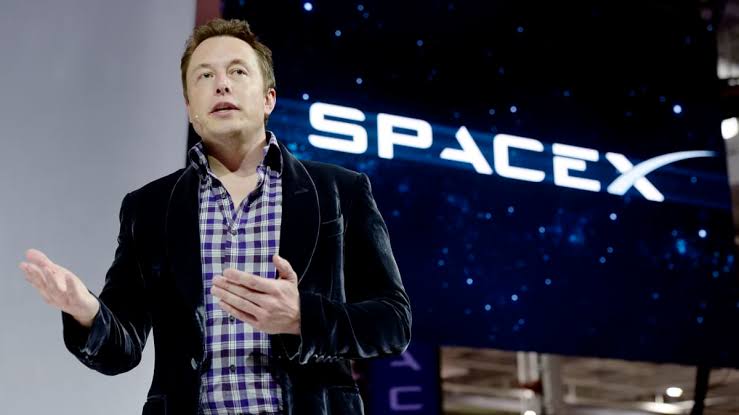
SpaceX has reported its first quarterly profit since becoming a listed company, and Elon Musk used the occasion to back the idea of combining the space and artificial intelligence group with Tesla.
Third-quarter revenue reached $14.58 billion, up 161% from a year earlier and ahead of analyst forecasts. Net income was $4.4 billion, a sharp reversal from the $541 million loss recorded in the previous quarter, when revenue was $7.8 billion.
Investors responded quickly. SpaceX shares rose about 8% in after-hours trading on Tuesday, while Tesla’s gained as much as 1.7%. The reaction is notable for a company whose early weeks on public markets were difficult.
AI overtakes Starlink
The results show how far the business has moved beyond launching rockets. SpaceX’s artificial intelligence unit generated $7.56 billion in the quarter, more than nine times the level of a year earlier, and is now the company’s largest source of revenue. Much of that growth comes from leasing computing capacity to AI developers from data centres in and around Memphis, Tennessee.
Analysts had flagged AI as the biggest swing factor for the quarter. The consensus expected about $6.3 billion from the unit, so the actual figure came in comfortably ahead. SpaceX has struck cloud computing agreements with Google, Anthropic and Reflection AI, among others, in deals that CNBC reported could be worth tens of billions of dollars a year.
Musk said the company is on track to bring 200,000 Nvidia Grace Blackwell systems online every month for the rest of this year.
Starlink, long the company’s main engine, brought in $5.2 billion, up 69%, and ended the quarter with 13.6 million consumer subscribers. Average monthly revenue per consumer fell to $69 from $83 a year ago, a reminder that subscriber growth does not automatically lift revenue per user. Launch and spacecraft sales rose 6% to $1.77 billion.
Guidance and ambition
Chief financial officer Bret Johnsen told investors that first-quarter 2027 revenue could land between $33 billion and $37 billion, far above the roughly $22.2 billion analysts had expected, according to LSEG data. Spending also came in lower than forecast.
Musk went further, saying annual recurring revenue could reach between $500 billion and $1 trillion by the end of 2027 if computing capacity keeps expanding. It is an ambitious projection that rests on assumptions about chips, power and customer demand that have yet to be tested.
He also said volume production of AI chips is targeted for the third quarter of 2028 at Terafab, a planned factory in Texas being developed with Tesla and Intel.
The Tesla question
Late in the call, Musk said the boards of SpaceX and Tesla have each formed a special committee of independent directors to consider a combination, at the request of shareholders. He said he is excluded from those discussions because he is a conflicted party.
He was careful not to promise an outcome. No terms, valuation or timetable have been disclosed. Musk said people should not assume a deal is certain, and shareholders at both companies would have to support it. He acknowledged that securing approval from at least half of Tesla’s shareholders would be a high hurdle.
The logic is not hard to see. The companies already work together on the Terafab chip project, and a merged group would bring Starlink connectivity, Tesla’s energy storage business and two capital budgets, each running into the tens of billions of dollars a year, under one roof.
Risks and what comes next
The risks are just as clear. SpaceX’s profitability is new, and the company is reportedly in talks to raise up to $40 billion to buy more Nvidia chips, which would add to the financial commitments any merger partner would have to absorb. A deal of this scale would also require lengthy negotiations and approvals from shareholders.
Tesla reports its own third-quarter results after the market closes on Wednesday, and investors will listen for any comment on the committee’s work. For now, the process is at an early stage, and the committees have not said when they expect to report.
What is already clear is that the market is treating SpaceX less as a launch company and more as an AI infrastructure business with a satellite network attached. Whether it ends up inside Tesla may matter less than whether its latest quarter proves repeatable.
