
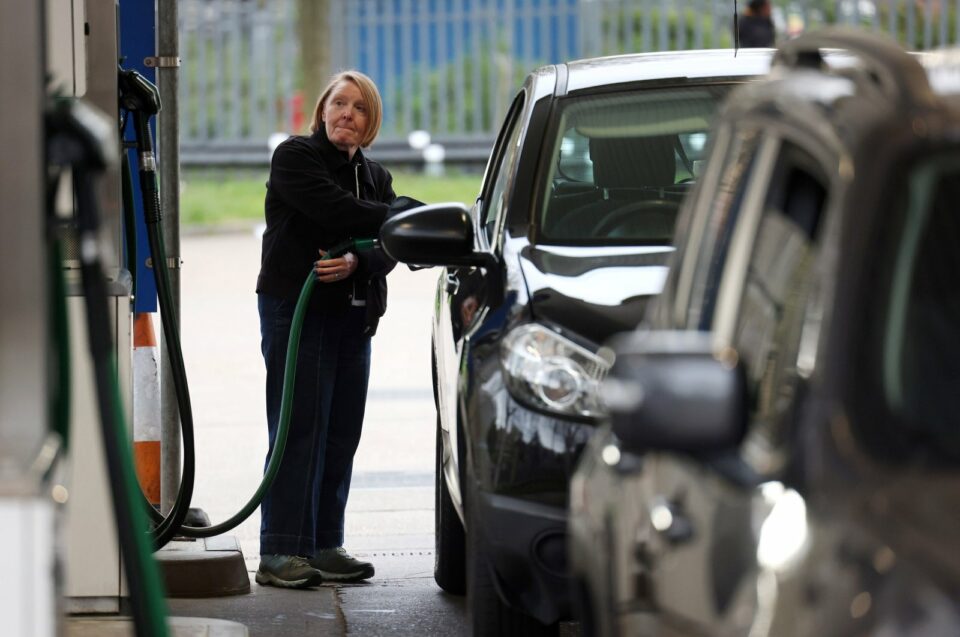
Britain’s annual inflation rate climbed to 3.5% in September, its highest level in almost a year, as dearer petrol and diesel pushed up the cost of getting around and the economic fallout from the war involving Iran kept feeding into household budgets.
The Office for National Statistics (ONS) said on Wednesday that consumer price inflation had accelerated from 3.1% in August. Economists polled by Reuters had expected 3.4%, and the result was well above the 3.0% the Bank of England had projected for the month in July.
It is the last inflation reading policymakers will see before the Bank’s next interest rate decision, and it arrives only a week before the Chancellor delivers the Budget on 28 October.
Fuel prices do the damage
Transport made the largest contribution to the increase, and motor fuels were at the centre of it. The ONS said average petrol and diesel prices in September were the highest in four years. By early October, diesel had already passed £2 a litre at some forecourts, which suggests the pressure at the pumps has yet to ease.
Grant Fitzner, the ONS chief economist, said inflation had climbed notably and reached its highest annual rate in almost a year.
The cause lies far from British forecourts. Brent crude, the global benchmark, was trading at around $110 a barrel on Wednesday morning, compared with less than $70 before the war began in February. Britain’s reliance on imported natural gas also leaves it exposed whenever energy markets lurch higher.
Fuel costs rarely stay in one place. Freight, food distribution and travel tend to follow with a lag, which is one reason the Bank expects inflation to keep rising in the coming months even if oil stops climbing.
Pressure beyond the pump
Beneath the headline figure, the detail points to broader price pressure. Core inflation, which strips out volatile items such as energy and food, rose to 2.8% from 2.6% in August. Goods inflation reached its highest rate since September 2023, according to the ONS, while the Retail Prices Index, an older measure still used in some contracts, stood at 3.9%.
Britain now also sits above its two biggest European neighbours. September inflation was 3.4% in France and 3.3% in Germany, the ONS noted, leaving the UK slightly ahead of both.
What it means for the Bank of England
For policymakers, the numbers complicate an already awkward balancing act. Raising interest rates to contain inflation risks slowing an economy that is already absorbing an energy shock, yet leaving them unchanged risks letting higher prices become entrenched.
Reuters reported that the stronger-than-expected figure bolstered market expectations that the Bank will raise rates. The Bank has said it expects inflation to average about 3.75% in the final three months of this year and to peak at roughly 4% in early 2027. Most economists believe it will remain above the 2% target for the rest of 2026 and into next year.
Higher borrowing costs would be felt most by households on variable or tracker mortgages and by those whose fixed-rate deals are about to end. Lenders typically reprice quickly when markets expect rates to rise. Savers could see better returns, although rising prices would erode some of the benefit.
A tricky backdrop for the Budget
The figures add pressure on the Treasury ahead of next Wednesday’s Budget. Higher inflation makes it harder to persuade voters that living costs are under control and raises the cost of servicing index-linked government debt.
Forecasters had expected public sector borrowing to rise to about £23.9 billion in September from £18.3 billion in August, underlining how little room for manoeuvre the Chancellor has. Households and businesses will be looking for any sign of relief on energy and fuel bills.
What to watch next
Oil remains the swing factor. Tensions around the Strait of Hormuz, which carries about a fifth of the world’s oil in peacetime, have kept crude near its highest level since May after Iran’s Revolutionary Guards said on Tuesday that mines had halted three more tankers. A calmer shipping picture could ease the pressure at the pumps; further disruption would do the opposite.
Analysts will also watch whether firms pass higher transport and energy costs on to customers through shop prices over the winter, which would show up first in the core measure.
The next inflation release will show whether September was a spike or the start of a longer climb. For now the message from the data is plain: the cost of living is rising again, and the road back to the Bank’s 2% target looks longer than it did a few months ago.
