
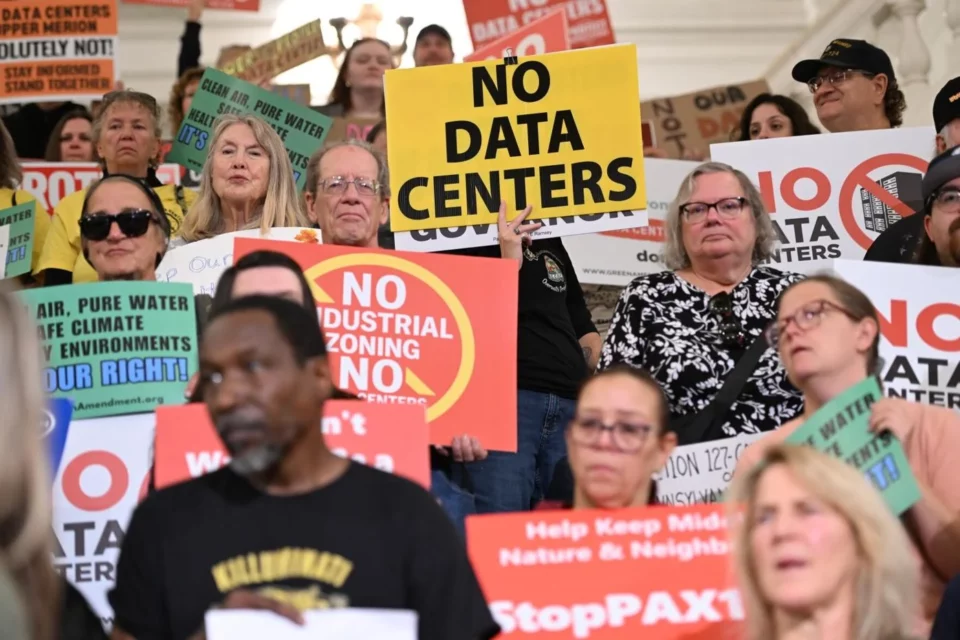
For the past two years, the technology industry built data centers faster than almost anyone could object. The midterm elections suggest that era is closing. Voters angry about electricity bills, land use and water consumption have turned an obscure piece of infrastructure into a political issue, and Democrats who campaigned on it now hold more power to act.
From local grievance to national issue
Data centers, the warehouse-sized facilities that house the computers behind artificial intelligence, draw huge amounts of electricity. In many communities, residents worry that the cost of expanding the power grid will land on household bills. Opposition has not split neatly along party lines, and state lawmakers from both parties have spent the year exploring limits on the buildout.
Tuesday’s results gave the movement a sharper edge. According to Fortune, three incoming governors who promised to restrict data center development won their races: Gina Hinojosa in Texas, Amy Acton in Ohio and Keisha Lance Bottoms in Georgia. Governors cannot rewrite federal law, but they control permitting, state incentives and the regulatory climate in the places where much of the new capacity is planned.
What Democrats are promising
When the new Congress is sworn in in January, Democrats will lead committees overseeing technology, commerce and cybersecurity. Forbes reported that they are expected to use subpoena and oversight powers to examine corporate AI practices, including the environmental effects of data centers and the risk of automated job losses. Legislation to set federal safety and transparency standards is also on the agenda.
TechCrunch outlined the likeliest next steps: more construction moratoriums and rules requiring data centers to pay for their own grid upgrades rather than pass costs to neighbours. Senator Bernie Sanders and Representative Alexandria Ocasio-Cortez have already proposed a nationwide pause on new large facilities until Congress passes broader AI guardrails.
The limits of what Congress can do
Several things stand between those proposals and law. President Donald Trump retains the power to veto federal legislation, and his administration has favoured a light regulatory touch. Fox Business noted that analysts expect Washington’s practical influence to come mainly through oversight rather than sweeping statutes.
Democrats are also not unanimous. Some within the party worry that a blanket freeze could slow US progress in AI and weaken national security, a point TechCrunch highlighted. UBS strategists wrote that Congress is unlikely to go much further than the states have, with the most probable outcome being that data centers pay more for the grid upgrades they require.
The numbers behind the worry
Investment banks have started putting figures on the risk. Goldman Sachs estimates that states led by Democrats who back extending or expanding construction moratoriums will account for 45% of America’s planned data center capacity come January, according to CNN. Wells Fargo calculates that for every 10% cut in planned Texas capacity, Big Tech’s overall AI infrastructure spending could fall by about 1.6%. That sounds modest until one remembers that the spending is measured in the hundreds of billions of dollars.
The industry changes its tune
Technology companies appear to have read the result. Forbes reported that OpenAI, Microsoft and Meta have recently used softer language about their building plans. Some are describing their sites as “compute campuses” and stressing commitments to local communities. Analysts say companies with sprawling existing footprints, such as Meta, may find it easier to expand current sites than to open new ones.
Wedbush analyst Dan Ives wrote in a client note that the sector needs to adjust and slow the pace of its rollout, adding that new congressional leaders will push companies to the negotiating table.
Markets weigh the risk
Investors reacted swiftly. Shares of chipmakers, AI cloud providers and infrastructure suppliers fell sharply this week, deepening a wider technology sell-off. Yet not every analyst sees a crisis. Some argue that capital spending on AI will stay strong through 2027 because demand for computing power remains high.
What to watch
The coming months will test how far the backlash goes. Watch January’s committee assignments, the first state legislative sessions under the new governors, and utility rate cases that decide who pays for new power lines. The earnings guidance from the largest cloud companies will show whether capital budgets are being trimmed.
The central question is no longer whether data centers will face rules. It is whether the rules will be negotiated with the industry or imposed on it.
