
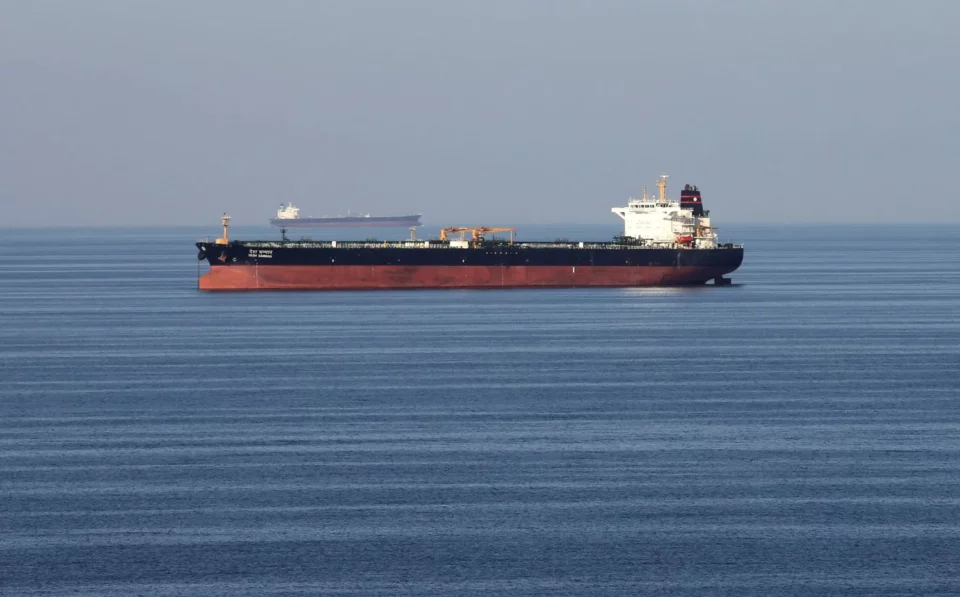
Oil prices climbed sharply on Monday after U.S. President Donald Trump rejected a conditional Iranian offer to reopen the Strait of Hormuz, reviving fears that one of the world’s most important energy corridors will stay disrupted for weeks to come.
Brent crude, the international benchmark, traded about 2.7 percent higher near $107 a barrel after touching $108.83 earlier in the session, while U.S. West Texas Intermediate futures gained around 3 percent to roughly $95. The rise reversed part of Friday’s drop of about 2 percent, when traders had bet on a truce between Washington and Tehran. The Hormuz story has dominated trading lately, forcing investors to swing between hope and disappointment within days. CNBC Fox News
What Tehran put on the table
The offer came on Friday from Iranian Foreign Minister Abbas Araghchi, who spoke on the sidelines of the United Nations General Assembly in New York. He said the strait would reopen after seven days and talks would restart, provided certain conditions were met. Iranian officials said those conditions include an end to what Tehran describes as American acts of aggression, the lifting of the U.S. naval blockade and economic pressure, and the release of Iranian assets. CNBC
Araghchi insisted the demands were not new and that Iran was still pursuing negotiations despite its grievances. Separately, Iranian President Masoud Pezeshkian told CBS News that Iran would allow United Nations nuclear inspectors into the country as part of a potential long-term ceasefire, despite an atmosphere of distrust. CBS News
Washington’s response
Trump confirmed that he had rejected the plan, and the Wall Street Journal reported, citing unnamed U.S. officials, that he told aides he expects American strikes on Iran to resume after November’s midterm elections. The president has previously said the conflict, which began with U.S. and Israeli airstrikes on Feb. 28, should end soon after the vote, with oil prices falling afterward. CNBCCNBC
The door has not been slammed shut, however. Trump told Axios he expects further negotiations this week. He also said a record volume of oil had left the strait overnight, more than before the war. That claim sits uneasily with other accounts describing a steep decline in commercial shipping through the waterway since the fighting began. CNBCFox News
Why the strait matters
Before the conflict, roughly one-fifth of global oil supplies moved through the Strait of Hormuz, the narrow passage linking the Gulf with the Gulf of Oman and the Arabian Sea. That concentration explains why small shifts in diplomatic mood can move prices within minutes. Cornelia Meyer, chief executive of Meyer Resources, said energy markets are pricing in a clear and present danger that hostilities return once the midterms are over. Al Jazeera CNBC
The ripple effect on markets and rates
Higher crude feeds quickly into fuel, freight and airfares, and it complicates the work of central banks. Many have begun raising rates this year in response to higher energy prices, with the European Central Bank and the Bank of Japan already tightening, according to U.S. Bank research. The Federal Reserve lifted its target range to 3.75 percent to 4.00 percent this month, its first increase since 2023. U.S. Bank
Markets reacted swiftly. In Asia, Japan’s Nikkei 225 lost 0.73 percent and South Korea’s Kospi fell 2.70 percent, while Hong Kong’s Hang Seng rose 0.54 percent and Australia’s S&P/ASX 200 edged up 0.17 percent. Bloomberg reported that bonds and stocks slipped as Middle East tensions flared, with the rate-sensitive two-year Treasury yield climbing five basis points to 4.90 percent and the 10-year yield adding four basis points. Al Jazeera Bloomberg
Wall Street futures also pointed lower, undoing some of the optimism that lifted U.S. stocks on Friday. Investors appeared to rotate toward energy and defensive sectors in early pre-market trading, while technology shares led declines. BNN Bloomberg Stock Market Watch
What to watch next
Attention now turns to whether the talks Trump referred to materialize this week, and whether Tehran’s seven-day window is treated as a live proposal or a closed chapter. Traders will also follow the Federal Reserve’s next meeting on Oct. 27-28, and inflation data due in mid-October, for evidence of how much of the energy shock is reaching consumer prices.
For households and businesses, the message is straightforward. Fuel costs are unlikely to ease meaningfully until shipping through the strait normalizes, and neither side has yet found a formula to make that happen. Until then, every headline from New York, Tehran or Washington has the potential to move the price at the pump.
