
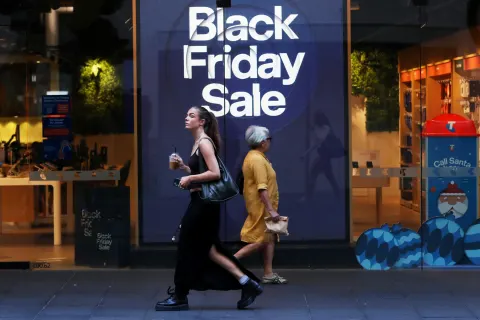
Black Friday has arrived with an apparent contradiction. Forecasters expect record online spending, yet many shoppers say they plan to spend less than last year. Both can be true, and understanding why is the key to getting through the sales without regret.
What the forecasts say
Adobe, which tracks US online sales, expects shoppers to spend $12.9 billion online today. That is up 9.2% on last year and makes Black Friday the second-biggest online day of the season. Cyber Monday on 30 November is forecast to reach $15.1 billion, which would be a single-day record. Across the five-day Cyber Week, Adobe projects $47.5 billion, and it expects online holiday spending from November through December to reach $275.1 billion.
Adobe says the biggest discounts of the season on televisions, apparel and appliances land on Black Friday itself. That helps explain why the day is growing faster than Cyber Monday. Many shoppers are also buying on mobile, with Adobe forecasting that 63% of Thanksgiving Day online sales will come through phones.
Cautious wallets
The mood among consumers looks different. A survey of 4,363 people in the US, UK, Canada and Australia by the marketing firm Omnisend found that planned Black Friday spending is down between 17% and 32% from last year. The average US shopper intends to spend about $336. The proportion planning to spend $1,000 or more roughly halved in the US, UK and Canada.
Finder, a comparison site, forecasts total planned Black Friday spending of about $71 billion in the United States, down from an estimated $81 billion last year. It expects more people to shop, but with smaller budgets.
Why the numbers can both be right
There are several possible explanations, though none is certain. First, online sales are taking a growing share of overall retail spending, so online totals can rise even if household budgets shrink. Second, higher prices lift the dollar value of every basket, even when people buy fewer items. Third, shoppers are using sales to stock up on essentials rather than splurge. Adobe expects sharp growth in categories such as baby products, pet products and household cleaning supplies.
The economic backdrop matters too. US inflation has been running hot and the Federal Reserve is widely expected to raise interest rates again next month, which keeps borrowing costs high. Shoppers who feel squeezed are more likely to hunt for deals and delay big purchases.
The buy now, pay later question
One trend deserves a closer look. Adobe projects that buy now, pay later services will drive $21.3 billion in holiday online spending, with $807 million on Black Friday alone. The Omnisend survey found that 30% to 40% of shoppers are willing to use these plans, especially for big-ticket items.
Instalment plans can make a purchase feel manageable, but they can also hide the true cost of a shopping spree. Several small payments across different providers are easy to lose track of. Consumer advocates generally advise treating them like any other debt.
Practical ways to shop smarter
A few habits can protect your budget:
- Set a ceiling first. Decide on a total before you open any shopping app, and treat it as a hard limit.
- Check price history. A “50% off” label is only meaningful if the original price was real. Price-tracking tools can show whether a deal is genuine.
- Prioritise needs over wants. If you were going to buy a mattress, a laptop or winter clothing anyway, today’s discounts may be worth using. A gadget you never planned to buy is not a saving.
- Be wary of instalment plans. Only use them if you are certain you can meet every payment.
- Watch for return rules. Holiday deals sometimes carry stricter return windows, so read the terms before you buy.
- Remember Cyber Monday. Some categories may be cheaper on Monday, and waiting costs nothing.
The bigger picture
Retail analysts expect the sales to stay competitive through the weekend, partly because stores are trying to win over careful consumers. Total spending numbers will not be known for a few days, and the final tallies may differ from the forecasts.
For shoppers, the message is straightforward. The deals are real, but so are the pressures on household budgets. A little planning today can mean a calmer January.

1 comment
[…] Black Friday 2026: Shoppers Hunt for Deals With… […]