
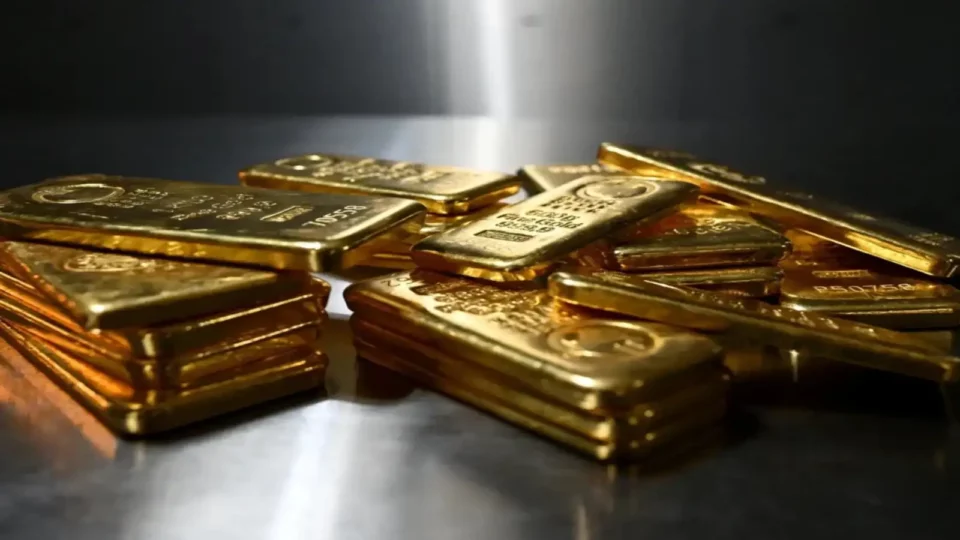
Gold clawed its way back above $3,600 an ounce on Monday, a day after finishing its worst week in eight months. Traders trimmed their fears of an outsized US interest-rate rise and bond yields eased.
Spot gold rose about 2.3% to roughly $3,619 an ounce in early trade, according to Anadolu Agency. December US gold futures gained about 2.5% to $3,603. The bounce follows a week in which bullion lost about 9%, depending on the measure used, and touched $3,513.54 on Friday, its lowest level since early September 2025. Gold has traded below $4,000 since 11 November. Silver fared worse, sliding roughly 15% over the week, according to Bloomberg.
Why gold fell
Gold usually attracts buyers when markets are nervous. This time it did the opposite, for two main reasons.
The first is the Federal Reserve. Several policymakers have signalled that inflation, not growth, is their priority. Philadelphia Fed President Anna Paulson said she is open to back-to-back rate increases, and Governor Lisa Cook warned that waiting risks falling behind. Governor Christopher Waller has floated a larger half-point move in December. Traders now see roughly a 90% chance of a quarter-point hike at the Fed’s 8–9 December meeting, and JPMorgan expects increases in December, January and March.
Higher rates and a firmer dollar weigh on gold, which pays no interest. Rising Treasury yields make holding bullion relatively less attractive.
The second reason is forced selling. As US tech stocks plunged on Friday, analysts said investors sold gold to raise cash and meet losses elsewhere. That pushed it down alongside shares rather than against them. Analysts noted that some money headed into Treasuries instead of the metal.
Why it bounced on Monday
The rebound reflects a modest shift in rate expectations. After the equity rout, markets scaled back bets on a larger December hike, though a quarter-point move is still widely expected. Treasury yields and the dollar softened, which helps gold. Technical indicators had also fallen deep into oversold territory, and some analysts saw signs of a bottom.
Nobody should assume the worst is over. A series of such sharp moves usually means volatility will continue.
What it means in India
Indian buyers felt the drop directly. Domestic 24-carat gold fell from about ₹1.37 lakh per 10 grams on 16 November to roughly ₹1.25 lakh by 22 November, according to market reports based on MCX prices. On 5 November it stood near ₹1.46 lakh. Monday’s rebound was modest, at roughly ₹1,000 to ₹1,500 per 10 grams.
The slide also reached the stock market. Jewellery and gold-finance shares such as Titan, Muthoot Finance and Kalyan Jewellers fell by up to 4% on Friday, and gold exchange-traded funds dropped sharply. Business Today reported that prices are now about 35% below their record high. Gold-loan lenders say falling prices do not automatically mean losses for them. But a sharp correction can reduce how much customers can borrow against the same quantity of gold.
What to watch this week
The calendar is crowded. Preliminary purchasing managers’ surveys arrive on Monday, followed by Wednesday’s US personal consumption expenditures report. That is the Fed’s preferred inflation gauge, and a hotter-than-expected figure would strengthen the case for faster tightening, pressuring gold and the dollar’s rivals alike. Thursday’s US Thanksgiving holiday will thin trading. Further Fed commentary is also likely.
Treasury Secretary Scott Bessent has urged the central bank not to overtighten, citing easing energy pressures. His comments show the political argument around the December decision is far from settled.
A note for households
Large moves are a reminder that gold is volatile, even though it is seen as a safe store of value. Financial planners generally advise against trying to time short-term swings, and suggest treating bullion as one part of a diversified portfolio rather than a bet on direction. Anyone with a large position, or who has borrowed against gold, should review their exposure with a licensed adviser.
For now, gold’s next move depends less on headlines about markets than on one number. If inflation proves stubborn on Wednesday, expectations of higher rates will harden. If it cools, the metal may find firmer footing.
