
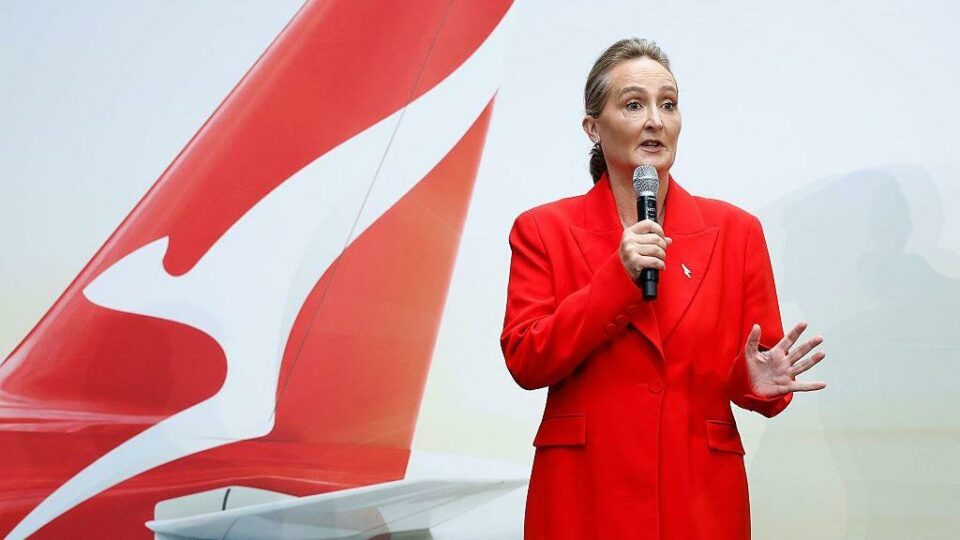
Qantas is cutting 850 corporate jobs as part of a new partnership with consulting firm Accenture, moving some work to India and leaning harder on automation. The airline told staff on Tuesday that the changes would roll out over the coming years, with the first expected by mid-2027.
What was announced
Chief executive Vanessa Hudson broke the news in an all-staff email. She acknowledged it was “hard news for some” and apologised for the uncertainty it would cause. The roles affected sit in the airline’s head office at Mascot in Sydney. The first wave is aimed at finance, procurement, people and marketing functions.
Under the deal, Qantas and Accenture will redesign and simplify the airline’s corporate operations together. Some roles will be outsourced to Accenture employees in India, while others will be removed through automation and process changes. Hudson said individual outcomes had not yet been decided, that affected employees would be consulted, and that the airline would try to redeploy as many people as it could.
The reasons given
Hudson pointed to the speed of change in artificial intelligence, which she described as unprecedented, as a driving force. The company’s argument is that AI and modern systems can handle routine back-office work faster and at lower cost, freeing money for aircraft, customer service and other priorities.
Investors liked the idea. Qantas shares rose about 3.7% after the announcement, and the broader ASX 200 gained 1.1% to its highest level since August, so the airline was one beneficiary of a generally strong session.
Not a surprise
The announcement formalises a plan that had been circulating for months. In August, the Australian Financial Review reported that Qantas was weighing a project, internally called Project iQ, that could shift as many as 1,000 back-office roles offshore in a deal with Accenture. Qantas confirmed at that point that it was in early-stage talks but said no decision had been made.
Job security has been a flashpoint between the airline and its staff for some time. Reports earlier this year described clashes between Qantas and the Australian Services Union over fears of outsourcing, and the union reacted sharply on Tuesday. One union described the decision as “chilling”, arguing that sending skilled Australian jobs offshore is a poor way to treat loyal workers.
A wider trend
Qantas is hardly alone. Companies across industries are reworking their workforces as they invest in AI. Microsoft offered voluntary exit packages to about 60,000 employees late last month, while reports have described similar outsourcing arrangements at Australian telecoms group Telstra. The pattern is consistent: firms say they are modernising, and workers and unions fear that the savings will come from headcount.
Back-office jobs are especially exposed because they involve repeatable tasks. Finance, procurement, HR and marketing support all contain steps that software can perform and that offshore teams can handle at lower labour cost.
What it means for staff and customers
For the 850 affected employees, the practical questions are timing, severance and redeployment. Qantas has not published detailed terms, and individual outcomes will emerge through consultation. Because changes will arrive in stages “over coming years”, some people may have time to retrain or move into other roles.
For passengers, the impact should be limited. These are head-office roles rather than pilots, cabin crew or airport staff. But the airline’s reputation matters, and past disputes over outsourcing have drawn public and political attention in Australia.
What to watch
Watch for three things: the exact terms Qantas offers to affected workers, how many roles it manages to redeploy, and whether regulators or politicians weigh in on the offshoring. Investors will also want to see whether the savings materialise and how the airline reports them.
The decision shows how quickly AI is turning from a technology talking point into a staffing decision. For Qantas, it is a bet that a leaner, more automated head office will pay off. For the workers on the other side of the email, the cost is already clear.
