
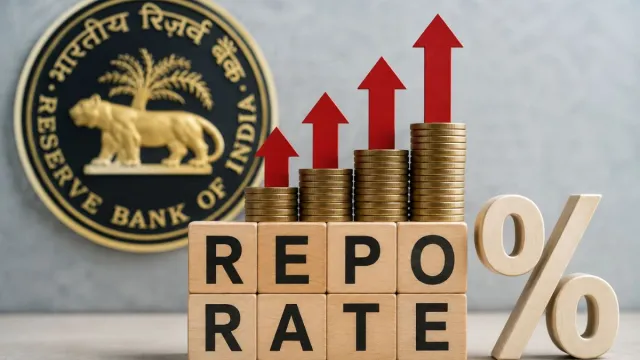
The Reserve Bank of India looks set to raise interest rates for a second time in two months. Retail inflation has climbed past the central bank’s upper limit, and economists are almost united in expecting action when the Monetary Policy Committee announces its decision on 4 December.
A Reuters poll conducted between 13 and 20 November found that 56 of 61 economists expect a 25-basis-point increase, taking the repo rate from 5.50% to 5.75%. Only two forecast a half-point move, and three expected no change.
Why a hike looks likely
The trigger is inflation. India’s retail price index rose 6.09% in October, breaching the 6% ceiling of the RBI’s target band. The central bank raised the repo rate by 25 basis points to 5.50% in October, its first increase in nearly four years, and changed its stance to calibrated tightening. In practical terms, that makes a rate cut very unlikely for now. The next move is either a hike or a pause.
The arithmetic adds urgency. With the repo rate at 5.50% and inflation at 6.09%, the real policy rate is negative, at about minus 0.6%. Economists have pointed out that November’s inflation data will be released on 14 December, after the policy decision, so the committee cannot wait for proof that price pressures are easing.
Outside factors are pulling in the same direction. Crude oil near $96 a barrel adds to imported inflation, and the US Federal Reserve is widely expected to lift its own rates in December. A wide gap between Indian and American rates could put pressure on the rupee and on capital flows.
What happens after December
December appears settled, but the longer-term path is less clear. Moneycontrol’s survey of 14 economists found them unanimous on a December hike, with views on the eventual peak ranging from 5.75% to 6.25%. In the Reuters poll, 34 of 46 respondents expect one more 25-basis-point increase in February 2027, which would take the repo rate to 6.00%. Many think inflation will stay close to 6% for another five to six months.
What it means for borrowers
The impact will be felt first by people with floating-rate loans linked to the repo rate. Banks usually pass on a change within a few months. As an illustration, a 20-year home loan of ₹50 lakh at 8.5% carries an EMI of roughly ₹43,400. A quarter-point rise would lift that by about ₹800 a month, or lengthen the tenure if the borrower keeps the EMI unchanged. The exact effect depends on the lender, the loan’s reset date and the spread over the benchmark.
Borrowers can take simple steps. They can check when their loan rate next resets, ask the lender about switching or negotiating the spread, and consider a small prepayment to offset the increase. Anyone on a fixed rate is shielded for now.
Savers and banks
For savers, higher policy rates tend to lead to better returns on fixed deposits, though banks often raise deposit rates more slowly than lending rates. Depositors may find it worthwhile to compare offers over the coming weeks.
For banks, rate rises can squeeze margins if deposit costs climb faster than loan yields. Even so, the sector enters the tightening phase in solid shape. The Finance Ministry said last week that state-run lenders’ combined net profit rose 16.9% from a year earlier to a record ₹1,09,540 crore in the first half of 2026–27. Bank shares have rallied strongly this month, though analysts note that valuations are stretched after a sharp run.
The global context
India is not alone in tightening. The Federal Reserve is almost certain to hike on 9 December, according to futures markets. Core inflation in Tokyo has reached a 16-month high, strengthening the case for a Bank of Japan increase. The European Central Bank is also preparing for a change of leadership, after euro zone countries chose Spain’s Pablo Hernández de Cos as its next president. Central banks worldwide are weighing inflation fed by high energy costs against signs that growth is cooling.
What to watch on 4 December
Beyond the rate itself, markets will study the committee’s language. A signal that the cycle is nearly finished would calm bond markets, while a hint of more hikes could unsettle them. Governor Sanjay Malhotra’s remarks on inflation, the rupee and liquidity will be scrutinised closely.
For households, the message is to prepare. A hike now looks like the base case, and more could follow.
