
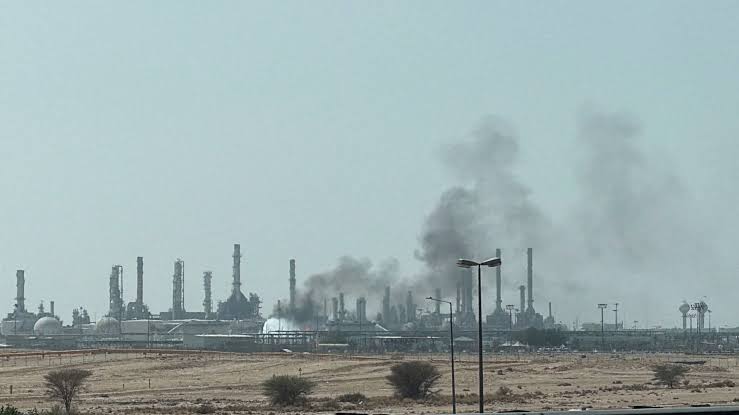
Oil markets were jolted again this week by fresh signs that the conflict in the Middle East is spreading, just as supplies from the Gulf had begun to recover.
Crude prices rose in early Asian trading on Thursday, extending the previous session’s gains. Brent futures were around $94.71 a barrel, while US West Texas Intermediate was near $84. On Wednesday, Brent had finished 3.5% higher and WTI about 2% higher.
What triggered the jump
The immediate cause was a pair of security reports. Yemen’s Iran-aligned Houthis said they had attacked Ras Tanura, Saudi Arabia’s largest oil refinery, along with Riyadh’s financial district. The refinery sits within a complex that also serves as a major export terminal for Saudi crude, which is why traders treat any threat to it so seriously.
Separately, Iran reported that at least two ships had struck mines in the Strait of Hormuz, the narrow waterway through which a large share of the world’s seaborne oil passes. Both claims were reported as statements by the parties involved.
Analysts expect the incidents to add to the geopolitical risk premium built into prices. Daniel Hynes of ANZ noted that the widening of the conflict threatens to halt the recovery in oil flows seen in recent weeks. Persian Gulf crude exports rose last week, he said, but remain on a declining trend.
A rally after a steep fall
The move needs context. Prices have fallen sharply over the past month. Brent settled at $114.88 on October 29 and had slid to about $88.77 by November 24, a drop of more than 20%, as Gulf exports recovered toward pre-war levels and US inventories built up. The jump this week has recovered only part of that decline.
The International Energy Agency has said it expects the global oil market to move back into surplus in the fourth quarter, as Gulf exports, Libyan flows and record US production feed into supply. Yet some analysts argue the market had overshot to the downside. One widely followed commodities analyst described it as oversold, pointing to low inventories and the ongoing threat to Middle Eastern supply.
Why the Strait of Hormuz matters
Few chokepoints carry as much weight. Even the suggestion of mines or attacks on shipping can drive up insurance costs, delay vessels and push buyers to bid for alternative cargoes. This year has already shown how sensitive prices are: during earlier phases of the Gulf conflict, Brent climbed above $109 a barrel.
Today’s moves are smaller, and the physical flow of oil has not been reported as halted. But traders are reacting to the direction of travel. A recovery in shipments from the region is the key reason prices dropped in November. If shipping routes or export facilities come under repeated attack, that recovery could stall.
OPEC+ in the background
Producers will also be watched closely. Market commentary points to an OPEC+ meeting scheduled for November 29, where members face a familiar choice: defend prices with deeper cuts, or accept lower prices in exchange for market share. Futures curves currently show prompt contracts trading well above longer-dated ones, a pattern known as backwardation that signals tightness today but expectations of easier supply later.
Reports of drone strikes on Russian refineries have added another pressure point, particularly for diesel and other middle distillates.
What it means for consumers
For households and businesses, crude prices feed through to pump prices and shipping costs with a delay. In the United States, regular gasoline averaged about $3.63 a gallon this week after hovering above $4 for much of the year, according to AAA figures reported by public radio. A renewed climb in crude would put that recent relief at risk, just as holiday travel peaks.
Higher energy costs are also unwelcome for central banks. With US inflation already running at 3.8% on the Fed’s preferred measure, a rebound in oil prices would complicate efforts to bring price growth back to target.
What to watch next
Three things will shape the next few days. First, whether the claimed attacks are confirmed and whether any physical damage to export capacity emerges. Second, whether shipping through Hormuz is disrupted in a lasting way. Third, how OPEC+ responds when it meets.
For now, the market is balancing two stories at once: a supply picture that has been improving and a security picture that is getting worse. Until one clearly wins out, expect oil prices to stay jumpy. Next Article
